Parts of a yacht: deck, cabin and systems, named
A yacht is built from the same parts as any other boat, with a few extra names for the spaces people live in. From the bottom up: keel, hull, deck, superstructure. From front to back: bow, foredeck, cockpit or saloon, stern. Below the deck you get the saloon, galley, berths, heads and engine room, and on a larger motor yacht there is a flybridge on top.
The vocabulary trips people up because it comes from three directions at once. Some words are structural and come from shipbuilding, like keel, frame and bulkhead. Some are navigational, like port, starboard, bow and stern. Some are domestic and simply rename the rooms, so a kitchen is a galley and a bathroom is a head. None of it is complicated once each word is attached to an object.
This guide walks the whole boat in order and names things as they appear. It also flags which parts are structural and stay put for the life of the hull, which are hardware you bolt on and replace, and which are consumables that wear out on a schedule. If you came looking for a diagram, read this as the labels that would sit around one.
Yacht or boat: what the word changes
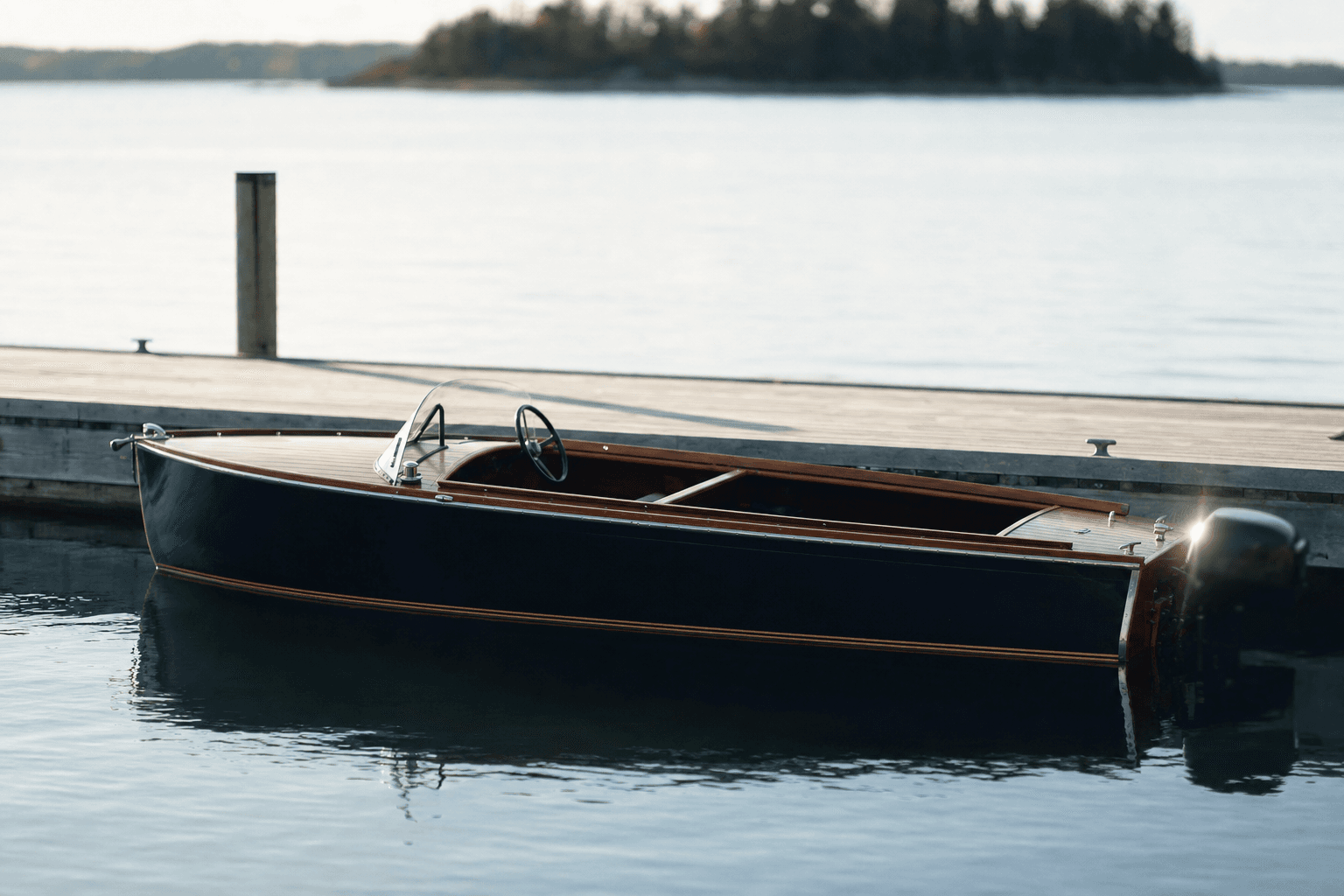
There is no universal legal line between a yacht and a boat. In normal use, a yacht is a pleasure vessel large enough to have accommodation aboard, and that accommodation is what adds the extra vocabulary. A 19 foot centre console has a bow, a helm and a transom. A 45 foot yacht has all of those plus a saloon, a galley, berths and a head.
The split that matters more is sail or power. A sailing yacht carries a mast, standing rigging, running rigging and a deep keel, and its cockpit is usually aft with the accommodation forward of it. A motor yacht carries engines amidships or aft, often has a flybridge above the main deck, and uses a shallower hull with more interior volume. Everything structural below the waterline is shared.
Terms for sides and ends are shared too, and they never change. Port is the left side looking forward, starboard is the right, forward is towards the bow, and aft is towards the stern. Amidships means the middle. Those four words are used for everything from stowing a fender to describing where a leak is.
Hull, keel and waterline: the structure underneath
The hull is the watertight body of the boat. Everything else is attached to it. Inside the hull are frames, which run across the boat, stringers, which run fore and aft, and bulkheads, which are full transverse walls that both stiffen the hull and divide the interior into compartments. On a production glassfibre yacht much of this is moulded as a single liner and bonded in.
The keel is the backbone along the bottom centreline. On a sailing yacht it is also a ballasted fin that resists sideways drift and keeps the boat upright, which is why it is heavy and deep. On a motor yacht the keel is often little more than a reinforced centreline with a shallow skeg aft to protect the running gear.
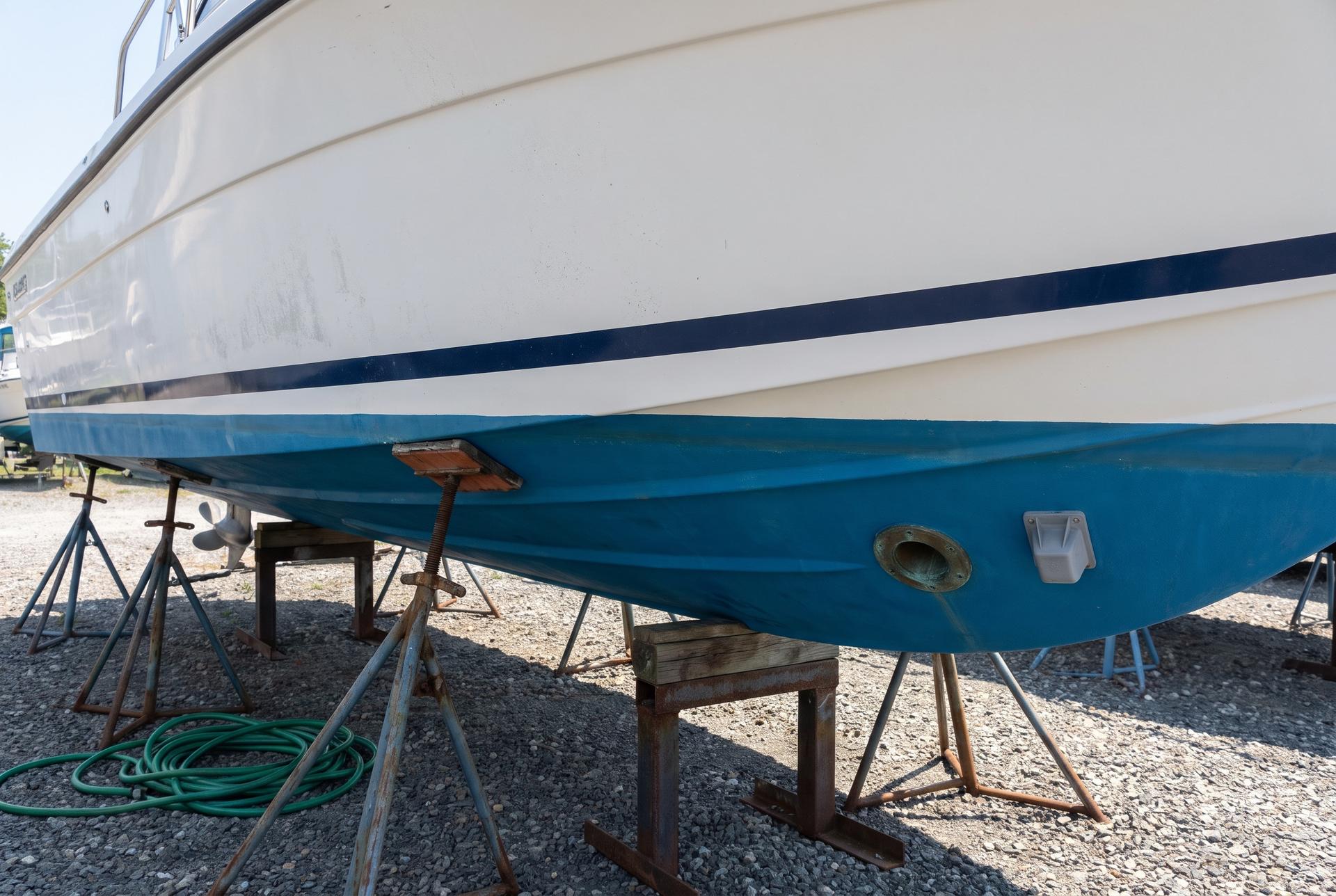
The waterline is where the surface of the water meets the hull at normal load. Above it is topsides, below it is the bottom. The stripe of paint at that boundary is the boot stripe or boot top. Below the waterline you will also find the rudder, the propeller and its shaft or sterndrive, through-hull fittings for cooling water and drains, and sacrificial anodes that corrode so that your metal fittings do not.
Structural versus consumable matters here. The hull, keel, frames and bulkheads are structural and you do not shop for them. Anodes, antifouling paint and through-hull seacocks are maintenance items with a service life.
Bow to stern: the deck layout
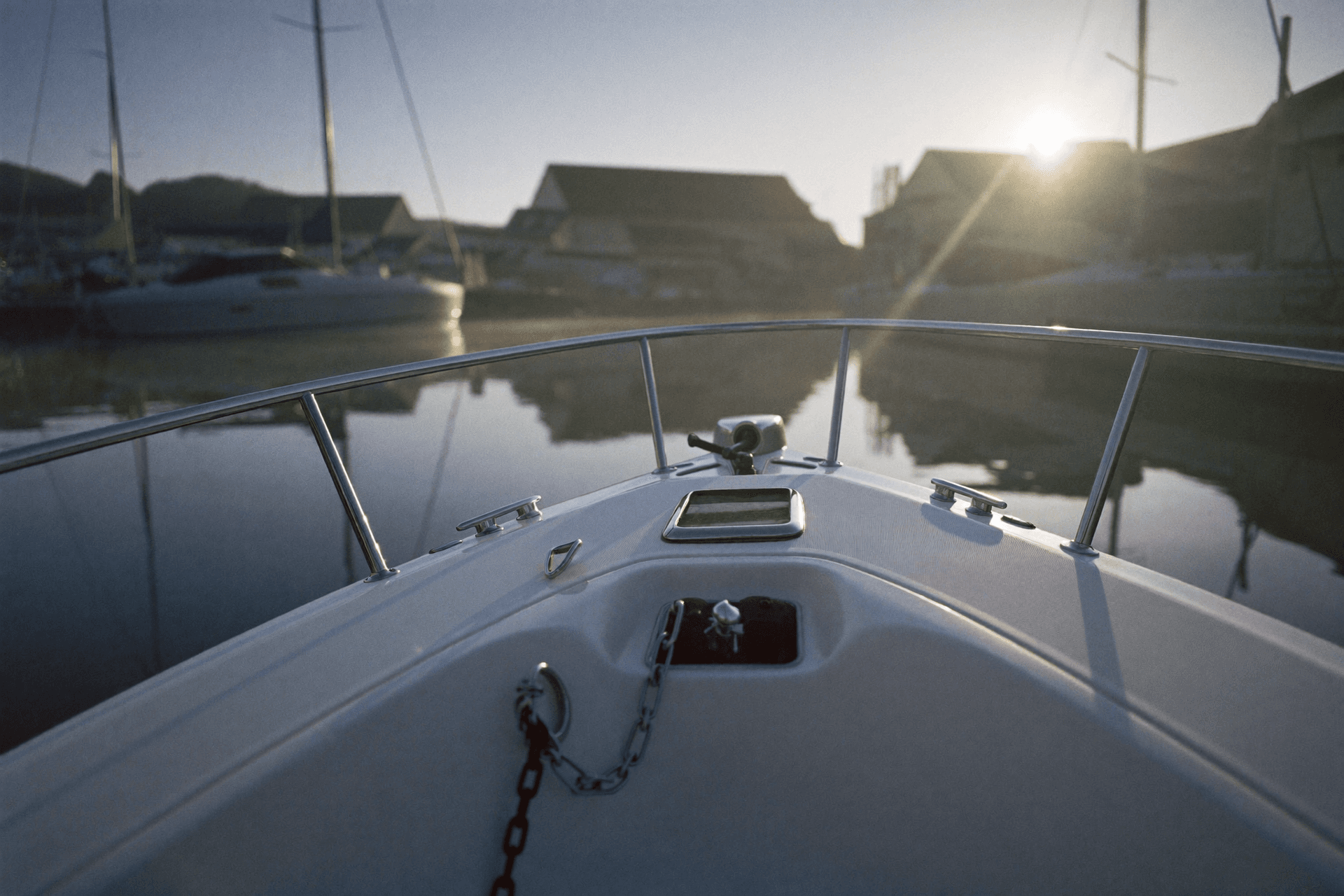
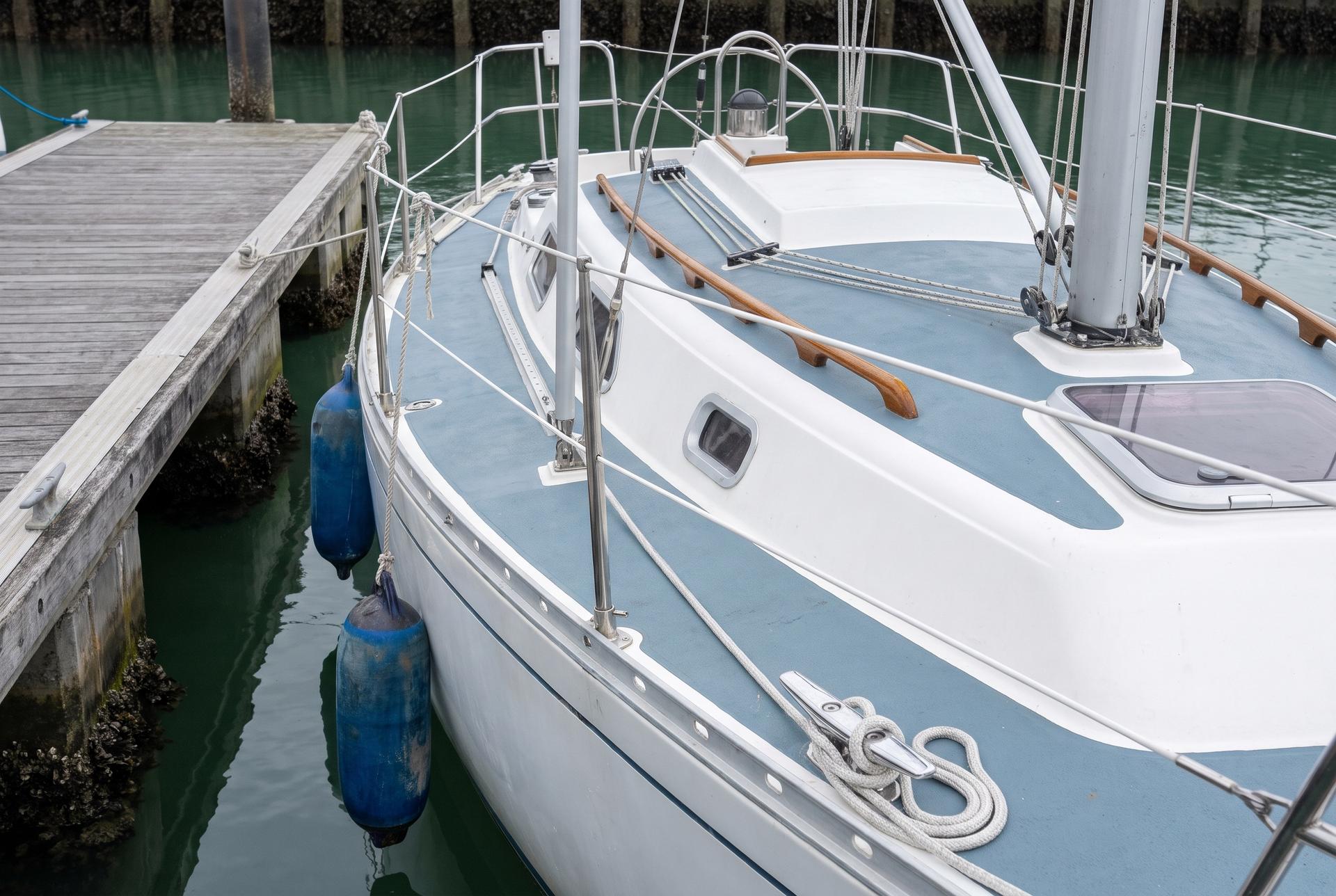
Walk from the front. The bow is the forward end of the hull, and the stem is the leading edge itself. The flat working area just behind it is the foredeck, which is where the anchor, the windlass and the mooring cleats live. On a sailing yacht the forward part of the deck carries the forestay fitting and often a sail locker hatch.
Along each side runs the side deck, and the raised lip at its outer edge is the toe rail. The upper edge of the hull where it meets the deck is the gunwale, pronounced gunnel. The joint itself is the hull-to-deck joint, which is a common source of slow leaks on older boats. Rails on posts above all this are the stanchions and lifelines, and the solid rails at bow and stern are the pulpit and pushpit or stern rail.
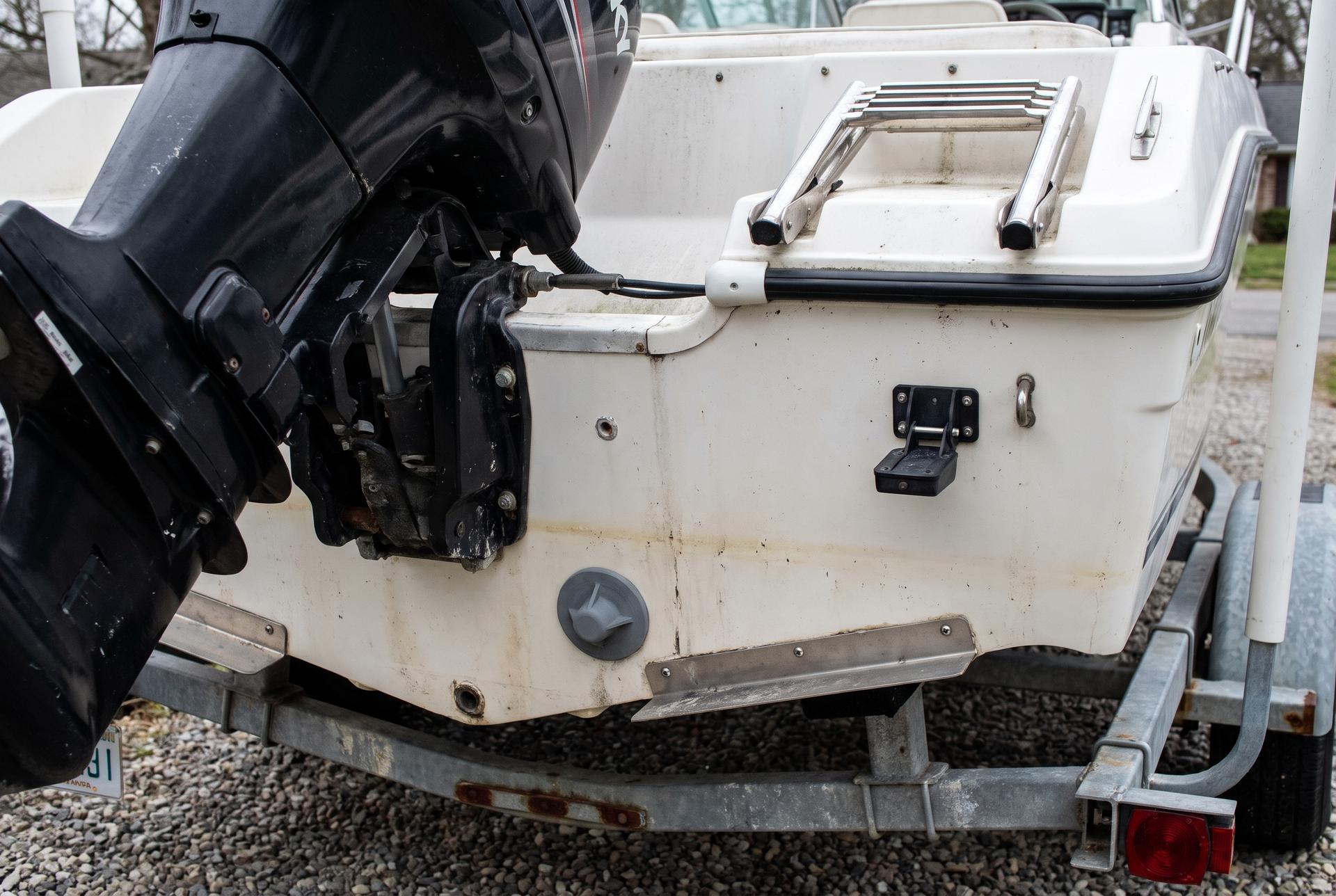
The raised structure in the middle is the coachroof or deckhouse, with portlights in its sides and hatches on top. Behind it is the cockpit, the recessed working area where the boat is steered, with a companionway leading below. Right at the back the deck ends at the transom, the flat panel across the stern, often with a swim platform and boarding ladder bolted to it.
Deck surfaces are consumable in a slow way. Non-skid texture wears smooth under foot traffic and needs recoating, and teak or foam decking needs cleaning with products made for it rather than household detergent.
Above deck: mast, flybridge, cockpit and helm
On a sailing yacht the mast stands on the keel or the coachroof and is held up by standing rigging: forestay forward, backstay aft, and shrouds to each side, spread outboard by spreaders. The lines that hoist and trim sails are running rigging, mostly halyards which go up and sheets which pull in. The horizontal spar at the foot of the mainsail is the boom. Lines are routed aft along the coachroof through turning blocks and deck organisers to clutches and winches.
On a motor yacht the equivalent height is the flybridge, an upper steering station open to the sky with its own helm, seating and often a second set of controls. Above or behind it sits the radar arch or hardtop, which carries the radar dome, antennas, spreader and deck lights, and sometimes a tender crane.
The helm is the steering station itself: wheel, engine controls, compass, and the instrument panel with displays and switches. The binnacle is the pedestal it sits on in a sailing cockpit. The helm is where most of the electronics on a yacht end up, which is why it is also where most refit money gets spent.
The cockpit carries hardware you handle constantly: winches, clutches or cam cleats, grab rails, and cockpit lockers for sheets, fenders and lines. Seats and cushions here live outdoors and are replaced far more often than anything structural.
Below deck: saloon, galley, berths, heads and engine room
Down the companionway is the saloon, the main living space, usually with a settee, a table and the main cabin lighting. It is the yacht equivalent of a living room, and the word is often spelt salon on American boats. The saloon sole is the floor, and hatches in it give access to the bilge, tanks and sometimes the engine.
The galley is the kitchen: stove, sink, iceboxes or refrigeration, and stowage. On a sailing yacht the stove is normally gimballed so it stays level when the boat heels. The head is the bathroom, named after its original position at the head of the ship, and on a yacht it contains the marine toilet, a sink and often a shower draining to a sump.
Sleeping spaces are berths, and a compartment with berths in it is a cabin. The one in the bow is the forepeak or V-berth, the ones tucked under the cockpit are quarter berths or aft cabins, and a narrow bunk with a lee cloth to keep you in at sea is a sea berth. The forward-most compartment, often a sealed crash space, is the forepeak.
The engine room or engine bay holds the main engine or engines, the gearbox, the shaft and stern gland, the fuel filters, the batteries on many boats, and often a generator. On a motor yacht it is a walk-in space. On a sailing yacht it is usually a box under the companionway steps. Either way it is where fuel, raw water and electrical faults start, so it is the first place to look when something smells wrong.
The systems that keep a yacht running
Four systems run below the lining panels. Bilge and drainage keeps water out. Electrical powers everything. Fresh water and waste feeds the galley and head. Navigation and instruments tell you where you are.
The bilge is the lowest internal part of the hull where water collects. A bilge pump sits there, usually with a float switch so it runs automatically, and discharges through a hull fitting above the waterline. Larger yachts carry more than one pump, with a high water alarm. Pumps and float switches are consumables and should be tested rather than trusted.
The electrical system splits in two. The DC side runs from the batteries through a battery switch and distribution panel to lights, pumps and electronics, protected by fuses or breakers at every branch. The AC side runs from shore power or a generator through its own breaker panel. On a yacht all of it lives in damp, salty air, so panels, switches and fuse blocks made for marine use with sealed fronts and corrosion-resistant hardware are worth the difference.
Navigation equipment starts with a GNSS sensor or chartplotter for position, then depth and speed from a transducer, wind at the masthead, a compass, and often radar and AIS. On modern boats these talk to each other over a network backbone and share one set of displays at the helm. If you are replacing an older positioning sensor, check what data format the existing instruments expect before buying.
Deck hardware and ground tackle
Ground tackle is the anchor and everything attached to it: the anchor itself, the chain or rode, the shackles, the bow roller it runs over, and the windlass that hauls it. The bitter end of the rode should be secured inside the anchor locker. On a yacht heavy enough to need a windlass, this is a high-current circuit with its own cabling and protection.
Cleats are the horned fittings you tie to, usually at bow, stern and amidships spring positions. Fairleads and chocks guide a line over the toe rail without chafe. Fenders hang between the hull and the dock or another boat, and fender lines or hooks attach them to the rail. Fenders are sized by boat length and are one of the few bits of deck kit you will buy repeatedly as they get lost or punctured.
Covers keep the sun off everything else. A cockpit cover, a sail cover on a sailing yacht, a flybridge or console cover on a motor yacht, and cushions that come inside at the end of the season all extend the life of the gear underneath. Ultraviolet light is what destroys canvas, cushion foam, line and clear vinyl windows, not water.
Deck lighting is the other everyday item: navigation lights in their fixed positions, an anchor light at the masthead or on a pole, courtesy lights at steps and in the cockpit, and spreader or deck floods for working on deck at night. Each of those has rules attached when it is a navigation light, and no rules at all when it is a courtesy light.
Which parts you actually buy, and what to check first
Group the boat into three. Structural parts, which you repair rather than purchase: hull, keel, frames, bulkheads, deck, transom. Hardware, which you unbolt and replace when it wears or you want something better: pumps, panels, switches, lights, seats, rod holders, deck fills, winches. Consumables, which run out: anodes, filters, fenders, cleaning products, non-skid coating, impellers, batteries.
Before buying any electrical part, confirm the system voltage. Most yachts are 12V DC, many larger ones are 24V, and the AC side is whatever your shore supply is. A switch or dimmer rated for one is not automatically right for the other, so read the rating printed on the product. For anything in an engine space on a gasoline boat, check that the part is described as ignition protected.
Before buying deck hardware, measure. Hole spacing, backing plate space behind the mounting surface, hose or pipe diameter for fills and through-hulls, and the thickness of the panel a flush mount has to pass through. A fitting that is almost right usually means a second set of holes in a deck you did not want to drill twice.
Before buying coatings and cleaners, match the surface. Non-skid paint, gelcoat, EVA foam decking and teak all want different products, and the wrong cleaner can strip or discolour the surface it is meant to protect. Check the stated coverage on the tin against the area you are doing so you buy enough to finish in one session.
| Part | Category | Typical reason to replace |
|---|---|---|
| Hull, keel, bulkheads | Structural | Repaired after damage, not replaced |
| Transom and deck | Structural | Core repair if water gets in |
| Bilge pump and float switch | Hardware | Failure, or upgrading capacity |
| Switch and fuse panels | Hardware | Corrosion, added circuits |
| Navigation and courtesy lights | Hardware | Lens crazing, corrosion, LED upgrade |
| Seats and cushions | Hardware | Vinyl and foam breakdown from sun |
| Fenders and lines | Consumable | Loss, chafe, puncture |
| Anodes and filters | Consumable | Scheduled maintenance |
| Non-skid coating and cleaners | Consumable | Wear, each season |
A general grouping for planning work and spares, not a maintenance schedule for any particular boat. Follow your builder's and engine manufacturer's service intervals.
Deck surfaces and cleaning
Non-skid coatings and cleaners for the deck areas you walk on.
Panels, switches and circuit protection
Marine-rated panels, breakers and fuse blocks for the helm and the electrical locker.
Deck hardware and lighting
Fittings that bolt to the deck, plus lights for working and for being seen.
Common questions
- What are the main parts of a yacht?
- The hull is the body, the keel runs along the bottom, and the deck covers the top. The bow is the front and the stern the back. Above deck sit the cockpit, helm, and either a mast or a flybridge. Below deck are the saloon, galley, berths, heads and engine room. Systems running through all of it include bilge, electrical, water and navigation.
- What is the difference between a yacht and a boat?
- There is no fixed legal line. In normal use a yacht is a pleasure vessel big enough to live aboard, which is why it has interior names like saloon, galley and berth. All the structural and directional words are shared with any other boat: hull, keel, bow, stern, port and starboard mean the same thing on a dinghy and on a 60 footer.
- What is a flybridge on a yacht?
- A flybridge is an upper steering station on top of the main deckhouse of a motor yacht. It has its own helm, engine controls, instruments and seating, and gives much better visibility for docking and spotting. The radar arch or hardtop above it usually carries antennas, radar and deck lights. Sailing yachts do not have one.
- What is the saloon on a yacht?
- The saloon is the main living space below deck, with seating, a table and the main cabin lighting. It is often spelt salon on American boats. The galley, meaning the kitchen, is usually next to it or part of the same space, and the heads, meaning the bathrooms, and the sleeping cabins open off it forward and aft.
- What is the bilge and why does it matter?
- The bilge is the lowest internal part of the hull, where any water that gets aboard collects. A bilge pump with a float switch sits there and discharges overboard through a fitting above the waterline. It matters because it is the one system that keeps the boat afloat when a hose or seal fails, so pumps and switches should be tested regularly.
- Which yacht parts wear out fastest?
- Anything exposed to sun and salt. Canvas covers, cushion vinyl and foam, lines and fender covers go first, usually from ultraviolet light rather than water. Then come anodes, filters and impellers on a service schedule, then pumps, switches and light fittings as corrosion gets into them. Hull, keel and bulkheads are structural and last the life of the boat.