 GearPort
Anchor light rules: what a boat must show at anchor
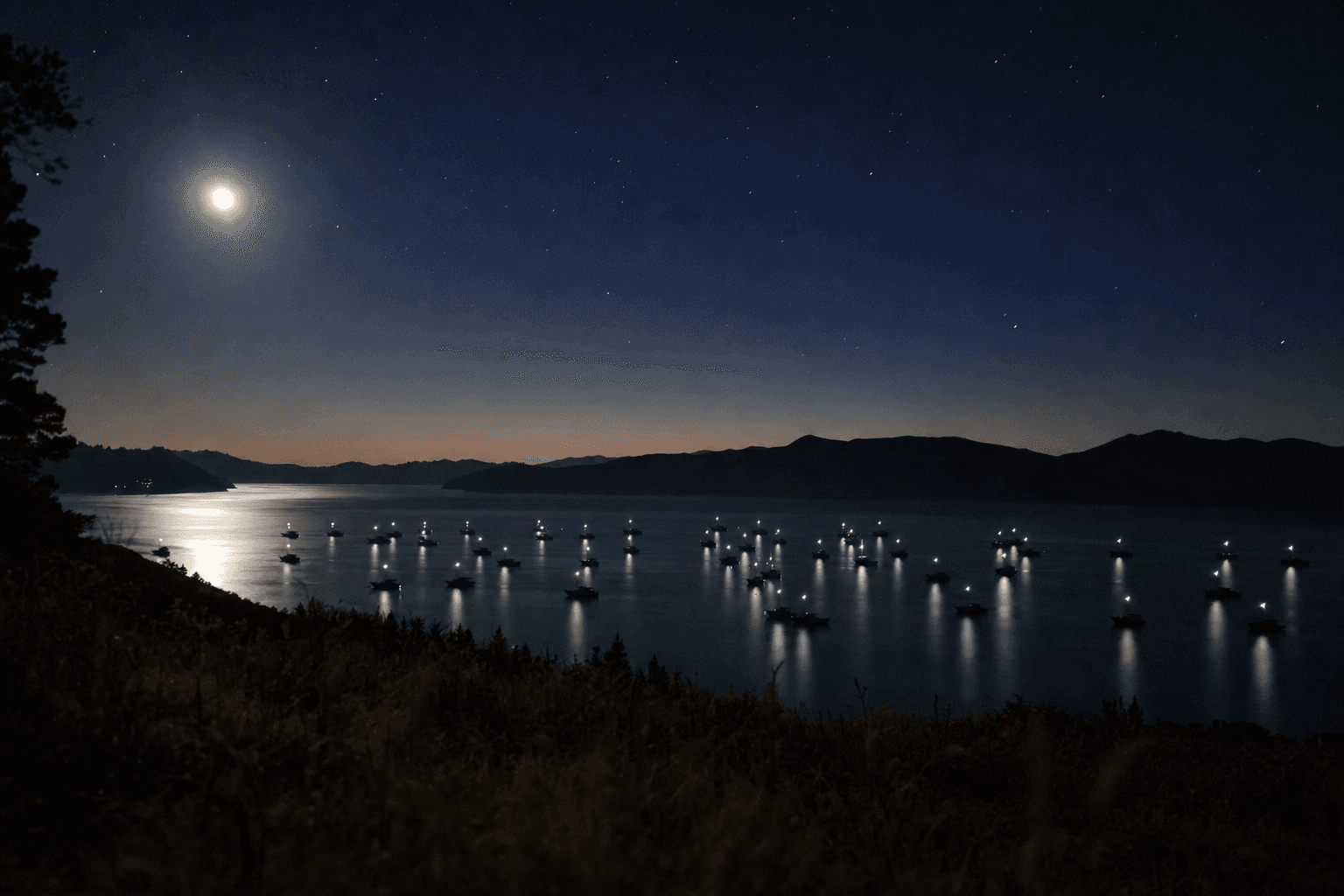
An anchored boat at night shows one thing: a white light visible from every direction. The rule that says so is Rule 30 of the Navigation Rules, it is short, and almost every question about anchor lights is answered by reading it for your boat's size.
The text below follows the US Inland Rules, codified at 33 CFR part 83. For anchor lights the Inland and International wording of Rule 30 is the same on the points a recreational boat cares about, with one extra exemption for special anchorage areas that appears only in the Inland Rules, at Rule 30(g). The Coast Guard's Navigation Rules and Regulations Handbook prints the two sets side by side if you want to compare them yourself.
The rule, by vessel size
A vessel at anchor exhibits, where it can best be seen, an all-round white light: a light showing over the full 360 degrees. During the day the equivalent signal is a single black ball shape in the fore part of the boat, which Rule 30(a)(i) states in the same breath as the light.
A vessel of less than 50 meters, which is about 164 feet and covers every recreational boat, may show one all-round white light where it can best be seen instead of the two-light arrangement required of big ships. One light, visible all round, positioned so nothing blocks it. That is the whole requirement, and it is Rule 30(b).
A vessel of 50 meters or more shows two all-round white lights under Rule 30(a): one in the fore part, and one at or near the stern at a lower level than the forward one. Under Rule 30(c) a vessel of 100 meters or more at anchor must also use the working or equivalent lights it has available to illuminate her decks. If you see a ship lit like a small town at anchor, that is why.
Visibility range comes from a different rule. Rule 22 sets minimum ranges in three vessel-length bands, under 12 meters, 12 to under 50 meters, and 50 meters and over. For an all-round white light the two smaller bands both require 2 nautical miles, and the largest requires 3. Every recreational boat sits in the 2 nautical mile bands, which is why anchor lights are commonly marked 2NM.
The two exemptions
A vessel of less than 7 meters, about 23 feet, is not required to show an anchor light provided it is anchored away from a narrow channel, a fairway, an anchorage, and anywhere other vessels normally navigate. That is Rule 30(e), and it covers the day shape as well as the light. Read the condition honestly: a 20 foot boat anchored at the edge of a busy creek is exactly where other boats navigate, and the exemption does not apply.
In US waters only, a vessel of less than 20 meters anchored inside a special anchorage area needs no anchor light or shape at all. That is Inland Rule 30(g), and the special anchorages themselves are the ones designated by regulation in 33 CFR part 110. They are marked on charts, and many mooring fields are designated ones. If you cannot point to the designation on a chart, assume it does not exist.
Neither exemption ever makes a light a bad idea. The rule sets the floor, and an unlit boat on a dark night is relying entirely on other people's radar and luck.
Which light on the boat is the anchor light
On most small powerboats the anchor light is the all-round white pole light at the stern, the same light used under way in combination with the sidelights. At anchor the sidelights go off and the all-round white stays on. If your switch panel has separate NAV and ANC positions, that is exactly the distinction they encode.
On sailboats the anchor light is usually an all-round white fitting at the top of the mast. It is not the same fitting as the masthead light, the 225 degree white light also called a steaming light, which is mounted partway up the mast or on its forward face and is shown only when the boat is under power.
A masthead light is not an anchor light. It covers 225 degrees, so on its own it cannot give the 360 degrees Rule 30 requires. Under way the arc astern is covered by the sternlight, which is a separate fitting and switches on with the rest of the under-way lights, not at anchor.
Buying and running one
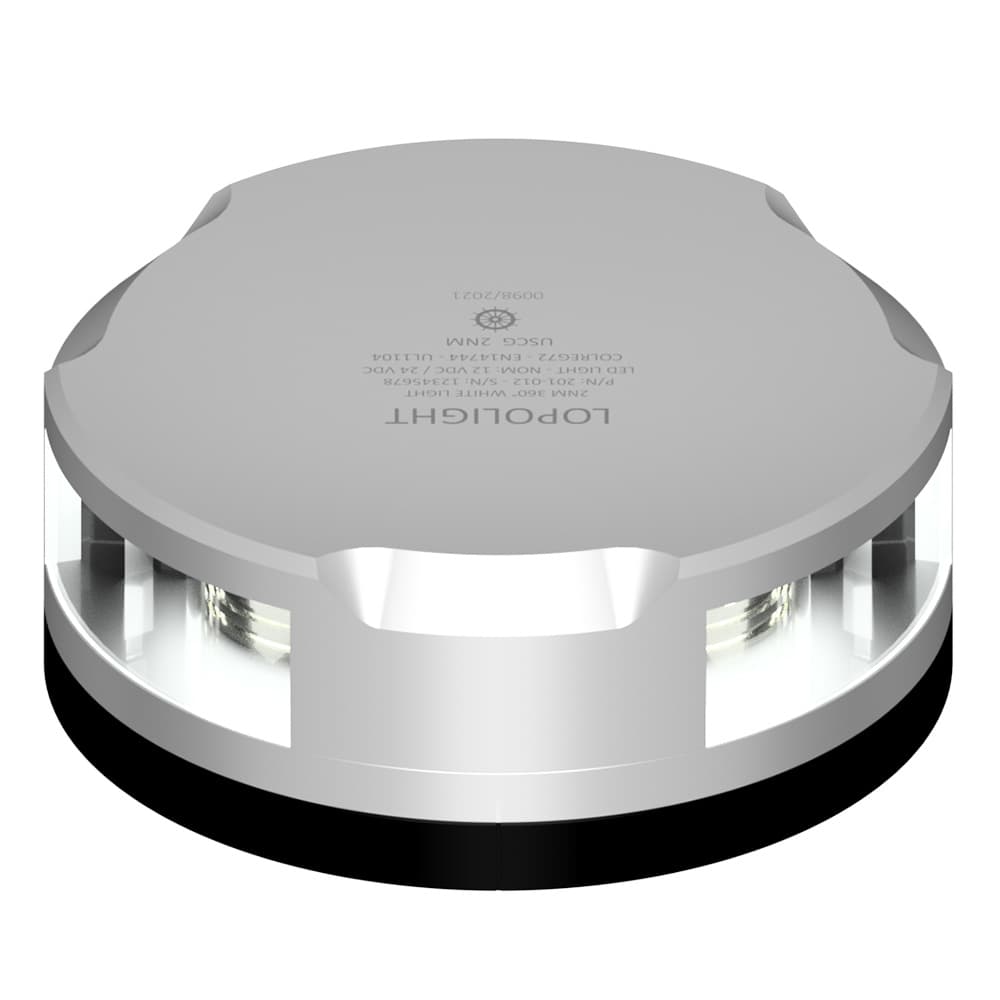
Buy the rating, not the brightness. 2NM is the minimum range Rule 22 requires of an all-round white light on a vessel under 50 meters. Fittings are also certified for a stated vessel length, commonly under 12 meters or under 20 meters, so check that alongside the range. How bright a light looks on a shelf tells you nothing about either figure.
Mount it above obstructions. An all-round light blocked by a T-top, a radar arch or a flag is no longer showing 360 degrees. Pole lights come in different heights for a reason, and fold-down or plug-in bases let a tall pole stow flat when running.
Mind the battery. An anchor light runs all night by definition. An LED fitting draws a fraction of an incandescent one over those hours, which on a small battery bank is the difference between starting in the morning and not.
Check it actually works from every side. Walk around the boat, or dinghy around it once. Anything that shadows the light is a problem you want to find before the night it matters.
All-round and anchor lights
2NM all-round white lights, fold-down and plug-in pole lights and bases, and LED anchor lights from Attwood, Perko, Hella Marine and Lumitec.
Common questions
- What light does a boat need at anchor?
- An all-round white light, visible over 360 degrees, displayed where it can best be seen. Any vessel under 50 meters, which is every recreational boat, meets Rule 30 with one such light. The daytime equivalent is a single black ball shape in the fore part of the boat.
- What lights must a 12 meter boat display when anchored at night?
- One all-round white light where it can best be seen. A 12 meter boat is under the 50 meter threshold, so a single 360 degree white light satisfies Rule 30. The under-7-meter exemption does not apply to a boat that size.
- Do I need an anchor light on a small boat?
- A boat under 7 meters anchored well away from channels, fairways, anchorages and anywhere vessels normally navigate is not required to show one, under Rule 30(e). Anchored anywhere near traffic, yes. And in US waters a boat under 20 meters inside a designated special anchorage area is exempt regardless, under Inland Rule 30(g).
- How far must an anchor light be visible?
- Rule 22 sets the minimum in three vessel-length bands. For an all-round white light both bands under 50 meters (under 12 meters, and 12 to under 50 meters) require 2 nautical miles, and vessels of 50 meters and over require 3. Fittings are marked with the range they are rated for, commonly 2NM, and with the vessel length they are certified for.
- Is the masthead light the same as an anchor light?
- No. A masthead light, also called a steaming light, covers 225 degrees and is shown by power-driven vessels under way. An anchor light covers the full 360 degrees. On sailboats the anchor light is a separate all-round fitting, usually at the top of the mast, while the steaming light sits lower down the mast.
- Can I use my all-round stern pole light as the anchor light?
- Yes. On small powerboats that is the standard arrangement: under way it works with the sidelights, and at anchor it stays on alone with the sidelights off.
Sources
- Rule 30, 33 CFR 83.30 (US Inland Navigation Rules): lights and shapes for a vessel at anchor, including the two-light arrangement at 30(a), the single all-round light for vessels under 50 meters at 30(b), deck lighting at 30(c), and the under-7-meter exemption at 30(e)
- Inland Rule 30(g), 33 CFR 83.30(g): a vessel of less than 20 meters at anchor in a special anchorage area is not required to exhibit anchor lights or shapes
- 33 CFR part 110: anchorage regulations, which designate the special anchorage areas
- Rule 22, 33 CFR 83.22: minimum visibility range for each light, by vessel length
- Rule 21, 33 CFR 83.21: definitions of the masthead light at 225 degrees and the all-round light at 360 degrees
- Navigation Rules and Regulations Handbook, US Coast Guard, which prints the International and Inland rules side by side