 GearPort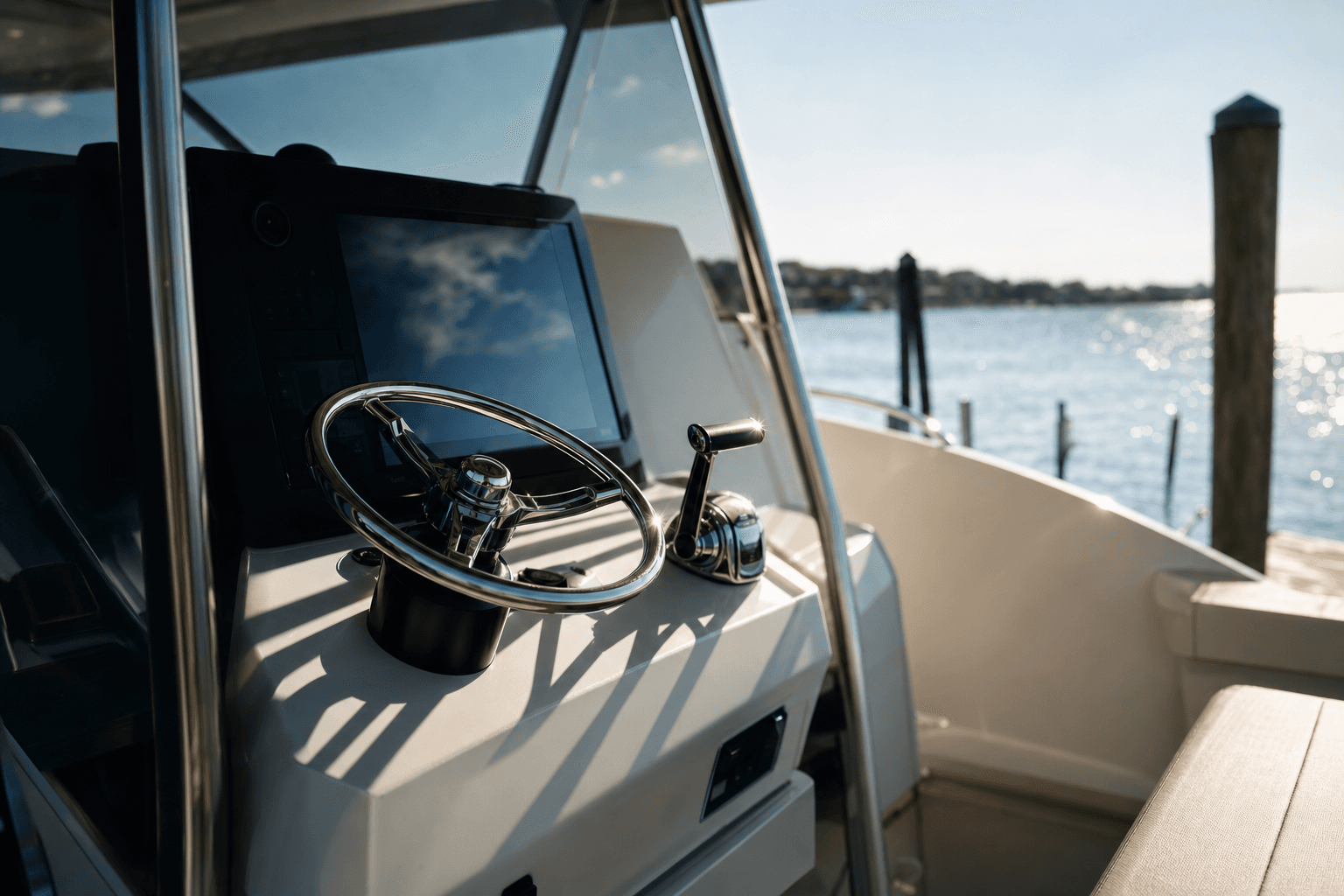
The helm and cockpit: the station you actually drive from
The helm is where the boat is steered. The cockpit is the working space around it. Together they are the part of the boat you interact with constantly, and the part where a small electrical fault ruins a day faster than anything mechanical.
Everything at a helm falls into one of four groups: steering, engine controls, instruments, and switching. Knowing which group a problem belongs to is most of the diagnosis.
The parts of a helm station
The wheel turns the steering system. The pedestal or console housing it is sometimes called the binnacle, a word that strictly means the compass housing and is now used loosely for the whole steering pod.
The throttle and shift controls set engine speed and direction, either as two levers or one combined control. The kill switch and its lanyard stop the engine if the driver leaves the helm, and it has no real substitute.
Instruments report what is happening, from a tachometer and a voltmeter through fuel, water and trim gauges to a multifunction display carrying chart, sonar and engine data on one screen. Choosing between analog gauges, digital instruments and screens, and understanding how they are networked together, is the subject of the electric helm displays guide.
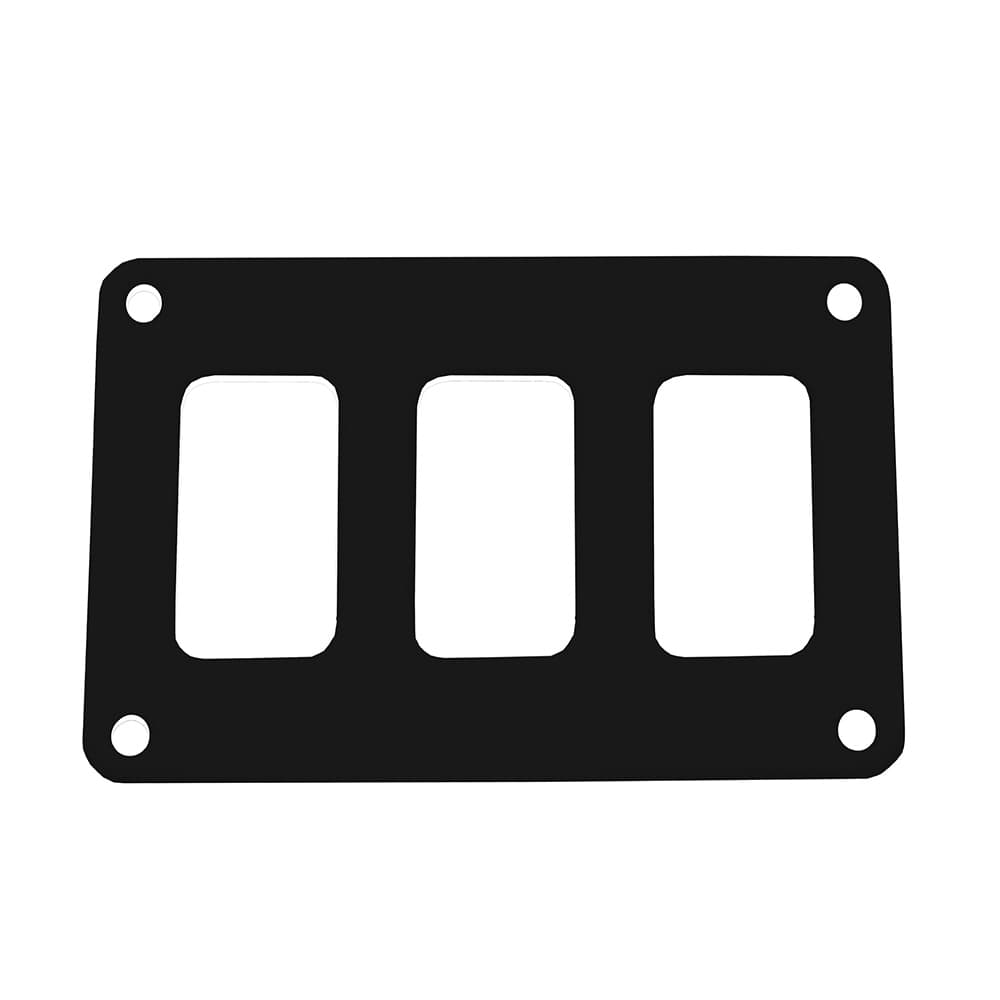
The switch panel turns circuits on and off, with a breaker or fuse protecting each one. A magnetic compass is the instrument that keeps working when the electrical system does not, which is the entire argument for still having one.
The cockpit around it
Helm seating ranges from a folding seat on a pedestal to a leaning post with a bolster. What matters is height and support: at speed in a chop you steer better braced than seated.
Pedestals set that height, and come fixed, swivelling, sliding on a track, or power-rise. A bolster is the flip-up section at the front of a seat that lets you drive standing while still supported.
Underfoot, non-skid surfacing, whether moulded into the deck or added as a pad, is what keeps you attached to the boat when it moves unexpectedly.
Scuppers drain the cockpit, and they matter more than they sound. A cockpit that will not drain is carrying weight in the worst place and losing freeboard.
Why most helm problems are electrical
A helm is a dense cluster of connections in a damp, vibrating, salty environment. That is why most helm faults trace back to corrosion and connections rather than to failed components.
The wiring answer is the ordinary marine one: tinned copper conductors, because tinning resists the corrosion that wicks up bare strands under the insulation, sealed terminals instead of bare crimped metal, and every circuit protected by a fuse or breaker sized to the wire. A switch panel with integral breakers does that last part tidily. The marine wiring basics guide covers wire choice, protection and connections in full.
What is specific to the helm is the density. Adding accessories to whatever circuit is nearest is how a helm loom becomes a puzzle nobody can debug, and a panel behind a console is the hardest place on the boat to trace one.
A voltmeter at the helm is one of the cheapest diagnostics on the boat: it shows charging problems developing long before something stops working.
One instrument-specific trap: a magnetic compass is deflected by nearby ferrous metal and by anything carrying current. A compass mounted next to a speaker magnet or a bundle of live wiring will read wrong, consistently and convincingly.
What fails at the helm
Switches and their connections, first and most often. Corroded terminals behind a panel produce faults that come and go with vibration and moisture.
Gauge senders rather than gauges. A gauge reading nonsense is more often the sender or its ground than the instrument itself. The electric helm displays guide covers senders and why a reading goes wrong.
Cracked or crazed lenses and screens from years of UV, which is cosmetic until it lets water in.
Steering that has gone heavy, which belongs to the steering system rather than the helm station. That is covered in the rudder guide, The rudder: how a boat steers, and what wears out.
Gauges and instruments
Tachometers from Faria Beede and VDO, voltmeters, and instrument accessories.
Switch panels and switches
Contura and rocker switches, and waterproof switch panels from Blue Sea, BEP and Pacer.
Compasses
Flush and bracket-mount magnetic compasses from Ritchie.
Helm seating and pedestals
Folding helm seats, fixed and swivelling pedestals, power-rise posts and seat slides from Springfield and Attwood.
Common questions
- What is the helm on a boat?
- The steering station: the wheel or tiller and the controls and instruments around it. The cockpit is the working area of the boat surrounding it.
- What is a binnacle?
- Strictly the housing for a ship's compass. In everyday use it now often means the whole pedestal or pod that carries the wheel and controls.
- Why do helm switches and controls work only sometimes?
- Almost always the connections behind the panel rather than the switch itself. A helm is a dense cluster of terminals in a damp, vibrating, salty place, so corrosion builds up on a crimp and the fault comes and goes with movement and moisture. Pull the panel and inspect the terminals before replacing anything.
- Why does my compass read incorrectly?
- A magnetic compass is deflected by nearby iron or steel and by current-carrying wiring. Mounted next to a speaker magnet or a live wiring bundle it will read wrong consistently, which is why compass position is chosen carefully and then checked.
- What is a bolster on a helm seat?
- The flip-up front section of the seat cushion. Folded up, it supports you at the hip so you can drive standing and braced, which is how most people steer once there is any chop.