 GearPort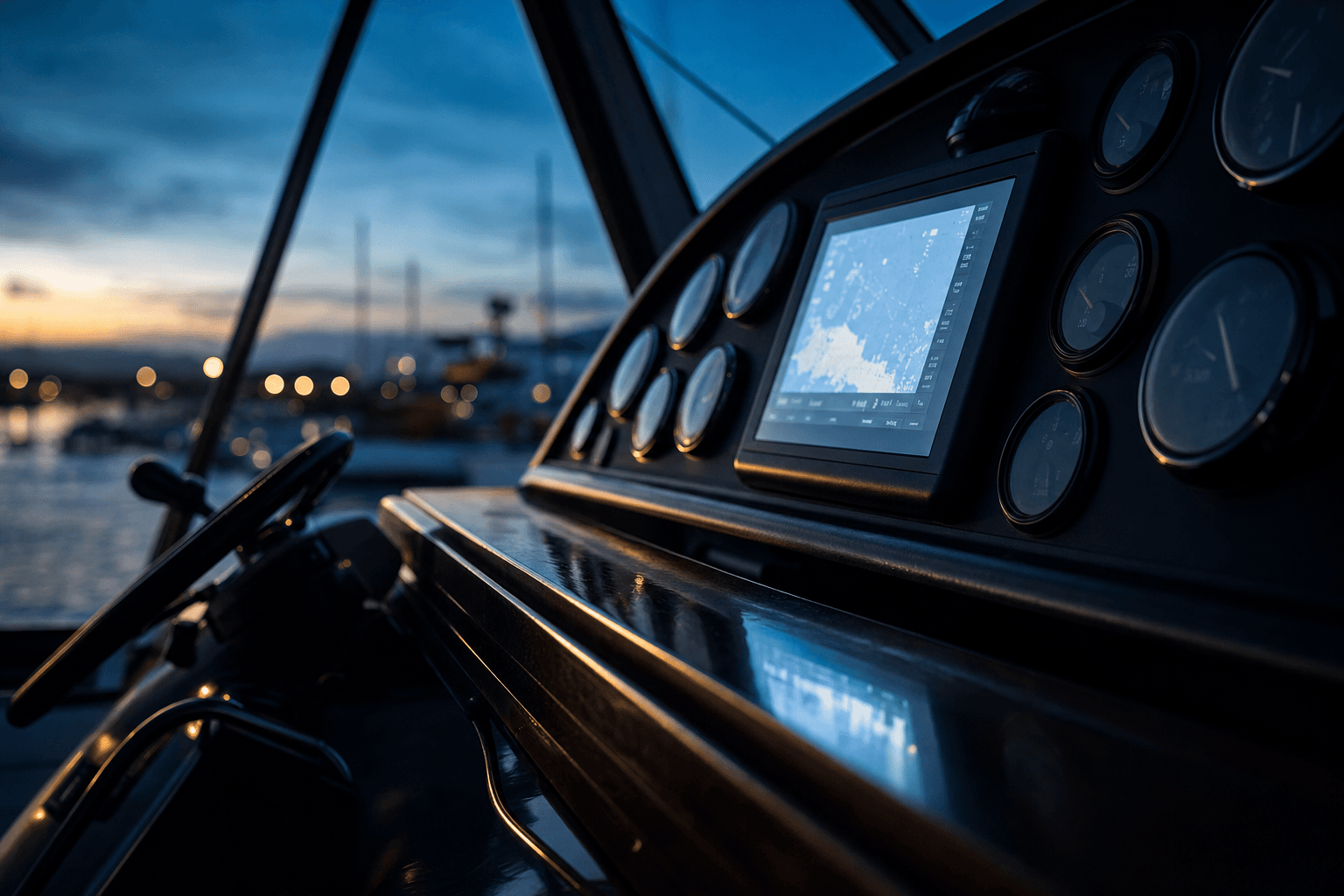
The electric helm: displays, gauges and digital switching
A helm dashboard used to be a row of round gauges and a row of switches, each wired to exactly one thing. The modern version puts most of that on screens and a network, and the difference is not cosmetic: it changes what you can see, what you can control, and what you troubleshoot when something stops.
This guide walks the four layers of an electric helm, from the instruments to the network that ties them together, and what to look at when upgrading one layer at a time.
The four layers of a helm dashboard
Instruments tell you what is happening: engine speed, voltage, fuel, pressure, temperature, depth. They can be analog gauges, digital gauges, or pages on a screen.
Displays are the screens: a fishfinder, a chartplotter, or a multifunction display that combines chart, sonar, engine data and more in one unit.
Switching turns circuits on and off: a physical switch panel with breakers or fuses, or a digital switching module controlled from a screen or keypad.
The network is what lets the layers talk. On modern boats that is NMEA 2000, a standard that lets equipment from different brands share one backbone. Understanding these four layers separately is most of the diagnosis when something at the helm stops working: a dead gauge is a different problem from a dead network.
Analog gauges and digital instruments
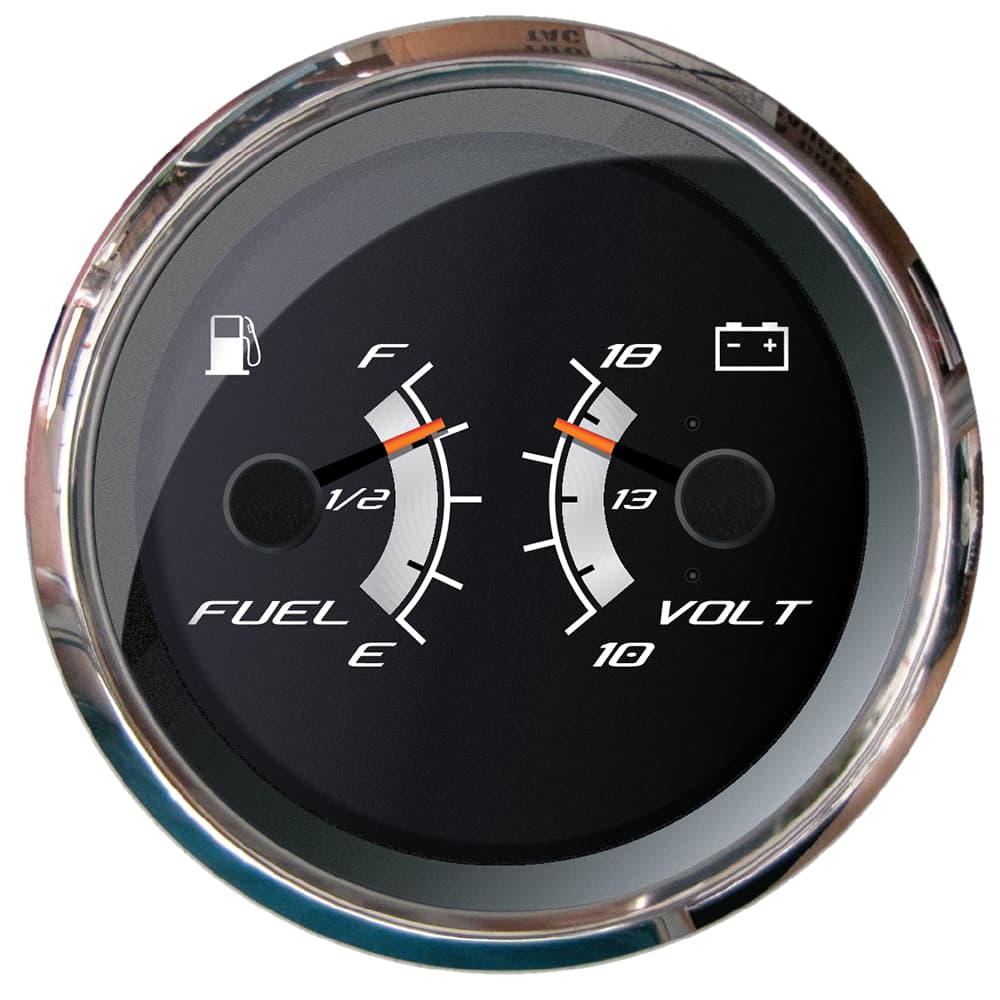
An analog gauge is a dial driven by a sender: a tachometer reading pulses from the engine, a fuel gauge reading resistance from a tank sender, a pressure gauge reading its sensor. Simple, legible, and each one is its own circuit, which makes faults easy to isolate: gauge, sender, or the wire between.
Gauges and senders are matched parts. Fuel senders in particular follow different resistance conventions, so a gauge and sender bought separately need to speak the same range or the needle will lie to you.
That is also the answer when a gauge reads wrong. Work outward in the order the circuit runs: the sender first, because senders wear, stick and corrode; then the sender's ground, a common cause of a reading that is consistently off rather than erratic; then the wire between; and only then the gauge itself. A gauge that has simply failed is the least likely of the four.
Digital instruments read the same senders, or take their data off the network, and present it on an LCD. Their real advantage is density: one display cycling through voltage, rpm and temperature replaces three holes in the dash.
It is worth keeping at least one instrument at the helm that owes nothing to software. A magnetic compass, and on many boats an analog voltmeter, keep reporting when everything with a processor has gone dark.
Fishfinders, chartplotters and multifunction displays
A fishfinder draws what its transducer hears. The screen gets the attention, but the transducer is half the instrument: its frequency and mounting decide what the display has to work with, and a poorly placed transducer makes an expensive screen read like a cheap one.
A chartplotter puts your GPS position on a chart. A multifunction display, an MFD, combines the two and adds engine data, radar and camera inputs, and on networked boats the controls for lighting and switching.
Buying advice compressed to its useful minimum: choose the screen size the helm can actually fit, check the unit supports the transducer you need for how you fish or cruise, and confirm it has an NMEA 2000 port so it can grow into the network instead of becoming an island.
NMEA 2000 in plain language
NMEA 2000 is a single trunk cable, the backbone, running the length of the helm area, with short drop cables tee-ing off to each device. The backbone carries power and data, both ends wear a terminator, and every device on it can hear every other device.
That is the entire concept. An engine gateway puts engine data on the backbone and every display can show it. A GPS antenna on the backbone feeds every screen at once. Add a device, add a tee and a drop.
The practical rules are few: exactly two terminators, one at each end of the backbone; keep drops short; power the backbone from a switched, fused circuit. Most mystery network faults are a missing terminator or a corroded tee.
The wiring behind all of it still obeys ordinary marine wiring rules: tinned conductors, sealed connections, and overcurrent protection sized to the conductor, which is what ABYC E-11 asks for. The marine wiring basics guide covers that side of it.
Switch panels and digital switching
A switch panel is the traditional answer and still an excellent one: each circuit gets a switch and its own breaker or fuse, in one labelled place. Waterproof rocker panels with backlighting cover most boats with no software involved.
Digital switching replaces the panel with a control module: circuits are switched electronically and commanded from a screen, a keypad or a phone. Lighting is a common first step, with one small module running several zones plus dimming and color from the helm.
The honest trade: digital switching removes a bundle of wire runs and adds configuration and a dependency on the controller. On a simple boat a good rocker panel is not the outdated choice, it is the appropriate one.
Engine gauges and instruments
Faria tachometers, fuel, pressure and temperature gauges, voltmeters and instrument accessories for the dash.
Switch panels and digital control
Waterproof rocker switch panels from Blue Sea and Pacer, and NMEA 2000 digital lighting control modules.
NMEA 2000 network parts
Backbone and drop cables, tees and terminators for building out the network.
Fishfinders and transducers
Sonar units and the transducers that decide what they can see.
Common questions
- What is the dashboard of a boat called?
- The helm, or the helm station: the wheel, the engine controls, the instruments and the switch panel together. The vertical panel holding gauges and screens is usually just called the dash or the instrument panel.
- What is a multifunction display on a boat?
- A single screen that combines chartplotter, sonar, engine data and other inputs. On an NMEA 2000 network it can show anything the network carries, and on boats with digital switching it can control lighting and circuits as well.
- What is NMEA 2000?
- The marine networking standard that lets equipment from different brands share data over one backbone cable. Devices tee off the backbone with short drop cables, the backbone is powered and terminated at both ends, and every display can show data from every sensor on it.
- What is digital switching on a boat?
- Circuits switched electronically by a control module and commanded from a screen, keypad or phone, instead of each circuit having its own physical switch and wire run to the helm. Lighting control modules are the common entry point.
- Why does my boat gauge read wrong?
- Usually the sender or its ground rather than the gauge. Check the sender first, then its ground connection, then the wire between, and replace the instrument last. Fuel gauges add one more trap: senders follow different resistance conventions, so a gauge and sender that do not share the same resistance range will read confidently and wrongly no matter how good the wiring is.
Sources
- ABYC E-11, AC and DC Electrical Systems on Boats: overcurrent protection sized to the conductor it protects, and the conductor requirements behind the tinned, sealed wiring practice described here
- NMEA 2000, the National Marine Electronics Association network standard: the powered and doubly terminated backbone with drop cables to each device