 GearPort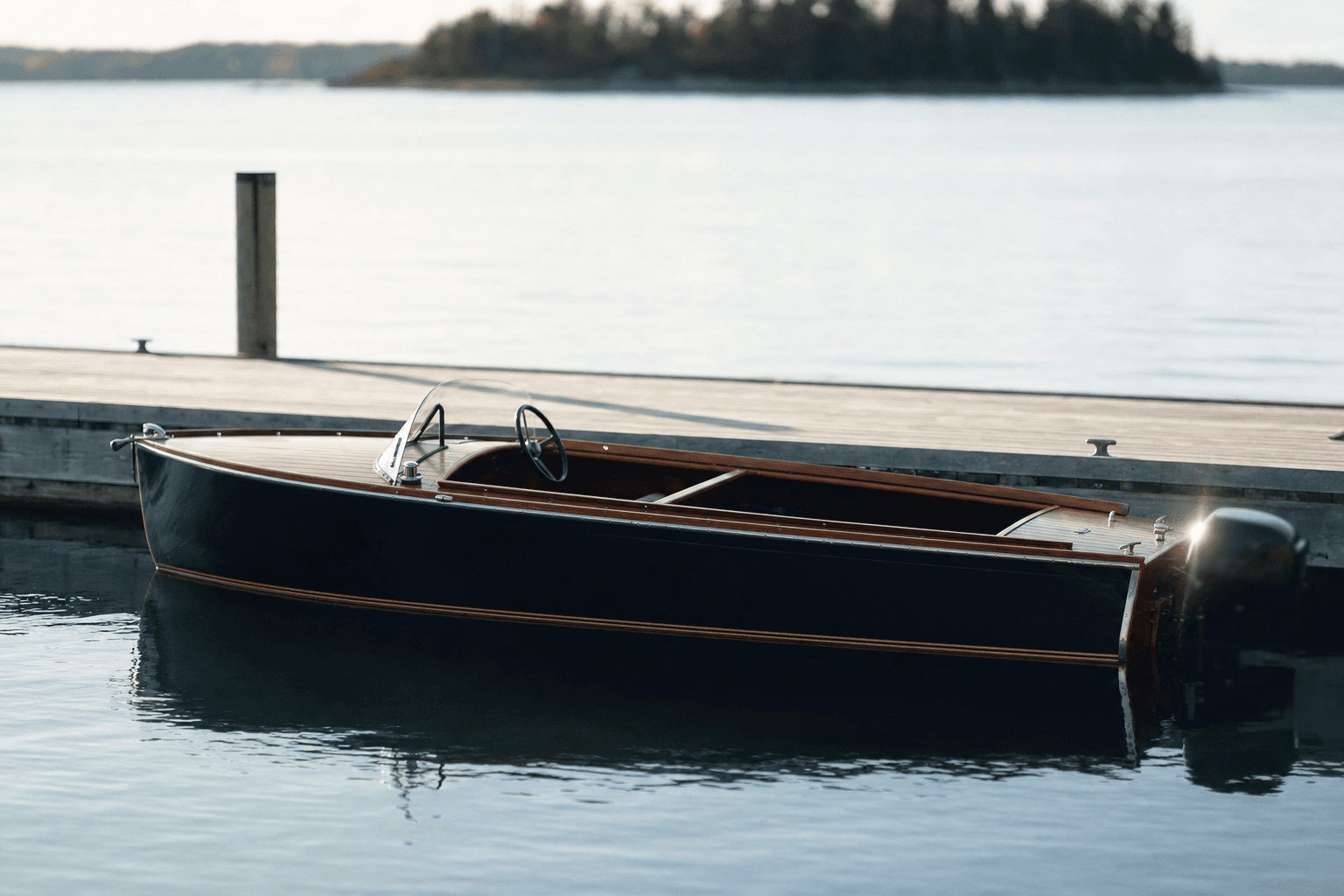
The parts of a boat, explained
Boats have their own vocabulary, and most of it is older than the engines bolted to them. That would be a harmless curiosity except for one thing: the moment you need a part, the vocabulary becomes the search box. Order a bow light when you meant a stern light and you have a lens in the wrong color showing the wrong arc. Tell a marina your transom is soft and they know exactly what to look at.
This page names every major part of a boat, says what it actually does, and shows which surface the gear you buy attaches to. Start with the diagram, then follow whichever section you came here for.
Front to back: bow, midship and stern
The bow is the front of the boat, the end shaped to part the water. Its job is to lift and push water aside, which is why it tends to be the wettest and most impact-prone part of the hull, and why anchor gear, bow rollers and the forward navigation light all live there.
Midship is simply the middle. On many powerboats it holds the helm, the seating and the fuel tank, because that is where weight does the least harm to how the boat rides. Plenty of common layouts do it differently, including center consoles and outboard boats with tanks aft or under the deck.
The stern is the back. It carries the engine, the steering gear, the boarding platform and, on a surprising number of boats, most of the weight. The flat panel that closes off the stern is the transom, and on an outboard boat it carries the engine's weight and feeds its thrust into the hull, which makes it one of the most heavily loaded areas on the boat.
Fore and aft are directions, not places. Fore means toward the bow, aft means toward the stern. A cleat can be mounted aft without being part of the stern.
Port and starboard, and why not left and right
Port is the left side as you face forward. Starboard is the right. They exist because left and right depend on which way the person talking happens to be looking, and port and starboard never change no matter where you stand or which way you turn.
This is not just tradition, it is wired into equipment you buy. Navigation lights are color-coded to it: red on port, green on starboard, so another skipper can tell at night which way you are pointing. That is a rule rather than a styling choice, set by the navigation rules and published in the United States as 33 CFR Part 83, and the navigation light rules guide covers what a given boat has to show. Buy those two the wrong way round and you are showing other boats the opposite of your actual heading.
Below and above: hull, waterline, keel and deck
Four words cover the body of the boat. The hull is the watertight shell that everything else is attached to, the waterline is where the surface of the water sits on it, the keel is the backbone running fore and aft along the bottom, and the deck is the surface built on top. The hull guide takes all of that apart properly, including chines, strakes, deadrise and what to watch below the waterline, so this is the short version.
Two of them drive a lot of buying decisions. The waterline is the reference for bottom paint, underwater lights and anything else that has to sit below the surface, and it moves with load and trim, which is why a boot stripe is painted as a band rather than a line. The keel carries ballast on a sailboat, may be little more than a reinforced center strip on a small aluminum boat, and is often the first part to touch bottom, although on many powerboats a skeg, sterndrive or outboard lower unit gets there first.
The deck is the surface you walk on, and the cockpit is the working area within it. The gunwale, pronounced gunnel, is the top edge of the boat's side, where the hull side meets the deck. That is where the rub rail runs and where rod holders, track systems and most rail-mounted accessories clamp on. A raised lip around the edge of the deck itself is a toe rail, or a coaming where it surrounds the cockpit, which is a different part with a different job.
The parts that carry the load
Stringers are the longitudinal beams under the deck that stiffen the hull. Bulkheads are the structural partitions that stiffen it and divide it into compartments, usually running across the boat, sometimes fore and aft. Together they are why a hull does not flex itself apart, and they are almost always hidden.
The transom closes the stern. On an outboard or sterndrive boat it carries the drive and transfers its thrust and weight into the hull structure, while an inboard delivers thrust through its engine beds and shaft instead. On outboard boats the transom is the part most likely to be quietly failing, because plywood coring is common, particularly on older boats, and it rots once water finds a way in through an unsealed bolt hole.
Chines are the edges where the bottom of the hull meets the sides. Strakes are the longitudinal ridges on the bottom of a planing hull that throw spray outward and downward and add lift. Both matter when you are deciding where a thru-hull fitting or an underwater light can sit without sitting in disturbed water.
Where the parts you buy actually attach
Most of what gets bolted to a boat attaches to one of five surfaces, which is a useful way to think about mounted gear even though plenty of purchases, from anchors and fenders to safety equipment, attach to none of them. The gunwale takes clamp-on and track-mounted gear: rod holders, cup holders, boarding aids. The deck takes anything through-bolted with a backing plate underneath. The transom takes the engine, trim tabs, transducers, boarding ladders and underwater lights. The hull below the waterline takes thru-hulls, anodes and bottom paint, and every hole in it deserves proper sealant and a second look. The dash and helm take the switches, gauges, wiring and audio.
That is the useful way to think about a parts list, and it is how the guides below are organized.
Part by part, in detail
Each of these goes deeper on one area of the boat: what is there, what it does, and what tends to fail.
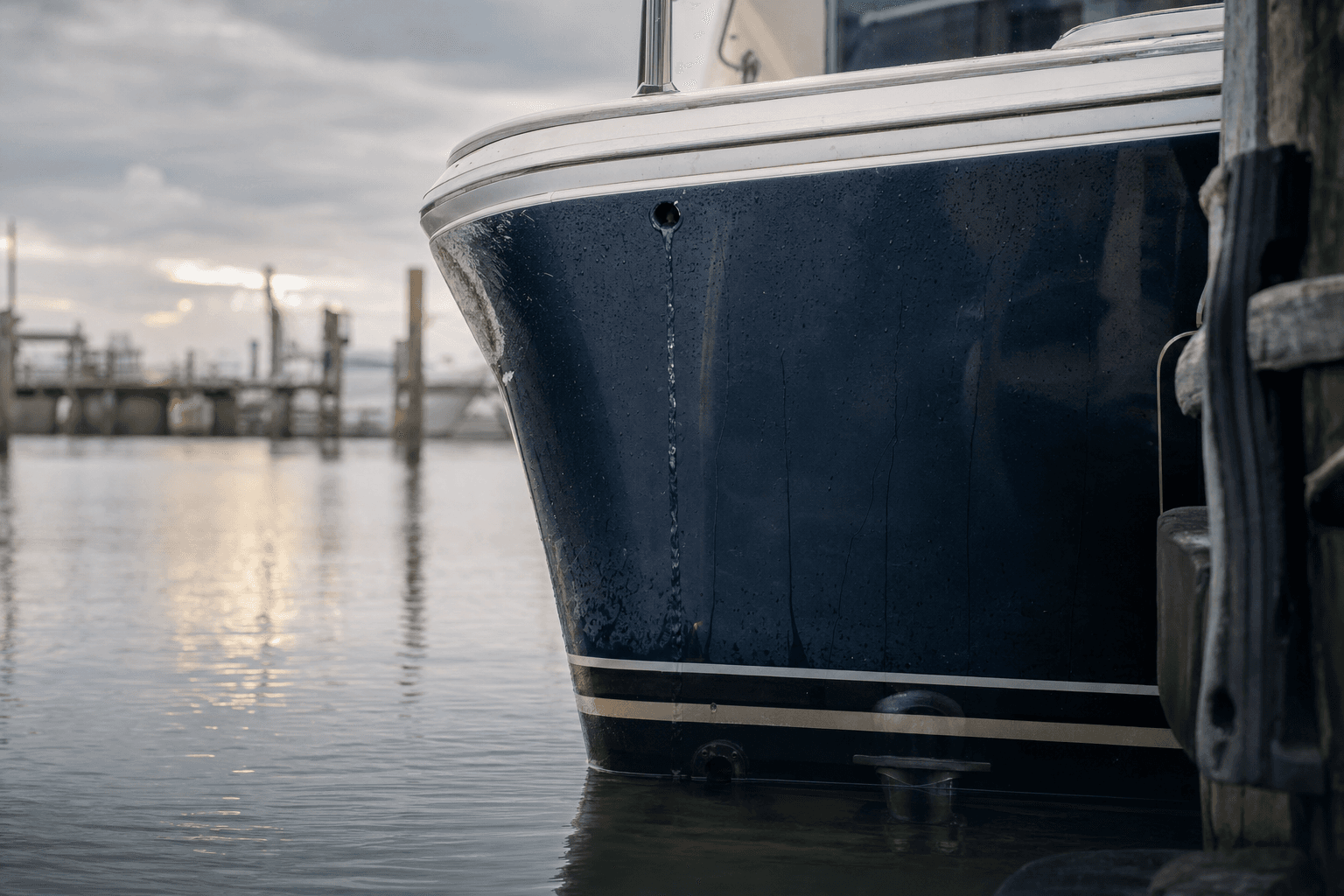 The stern and transom: what is back there and what failsWhat the stern and transom of a boat are, the difference between them, everything that mounts there, and the failures worth catching early.
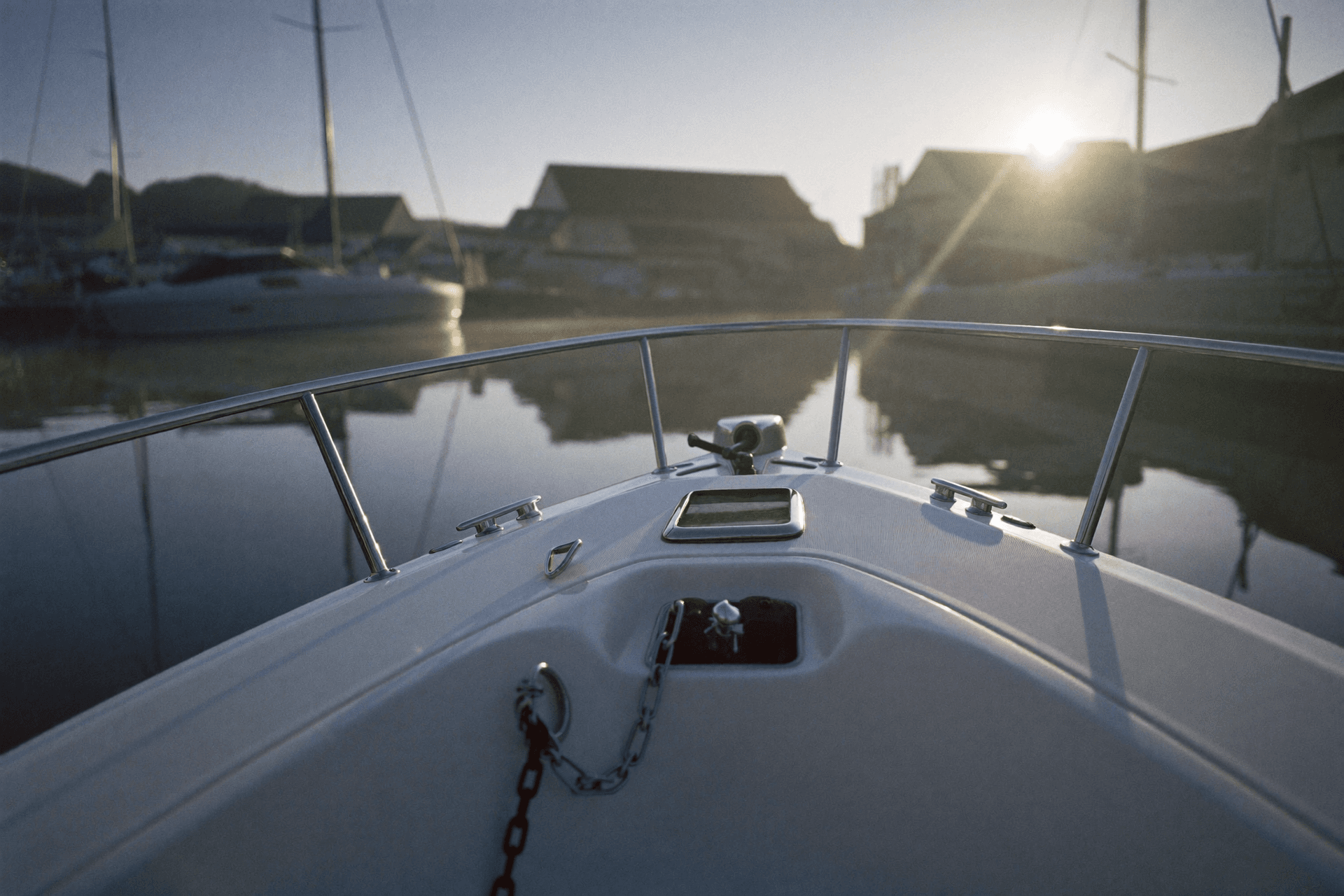 The bow: what is up front and what it has to surviveThe bow is the front of a boat and the stern is the back. Here is every part of the bow named, how bow shape changes the ride, and what fails up front.
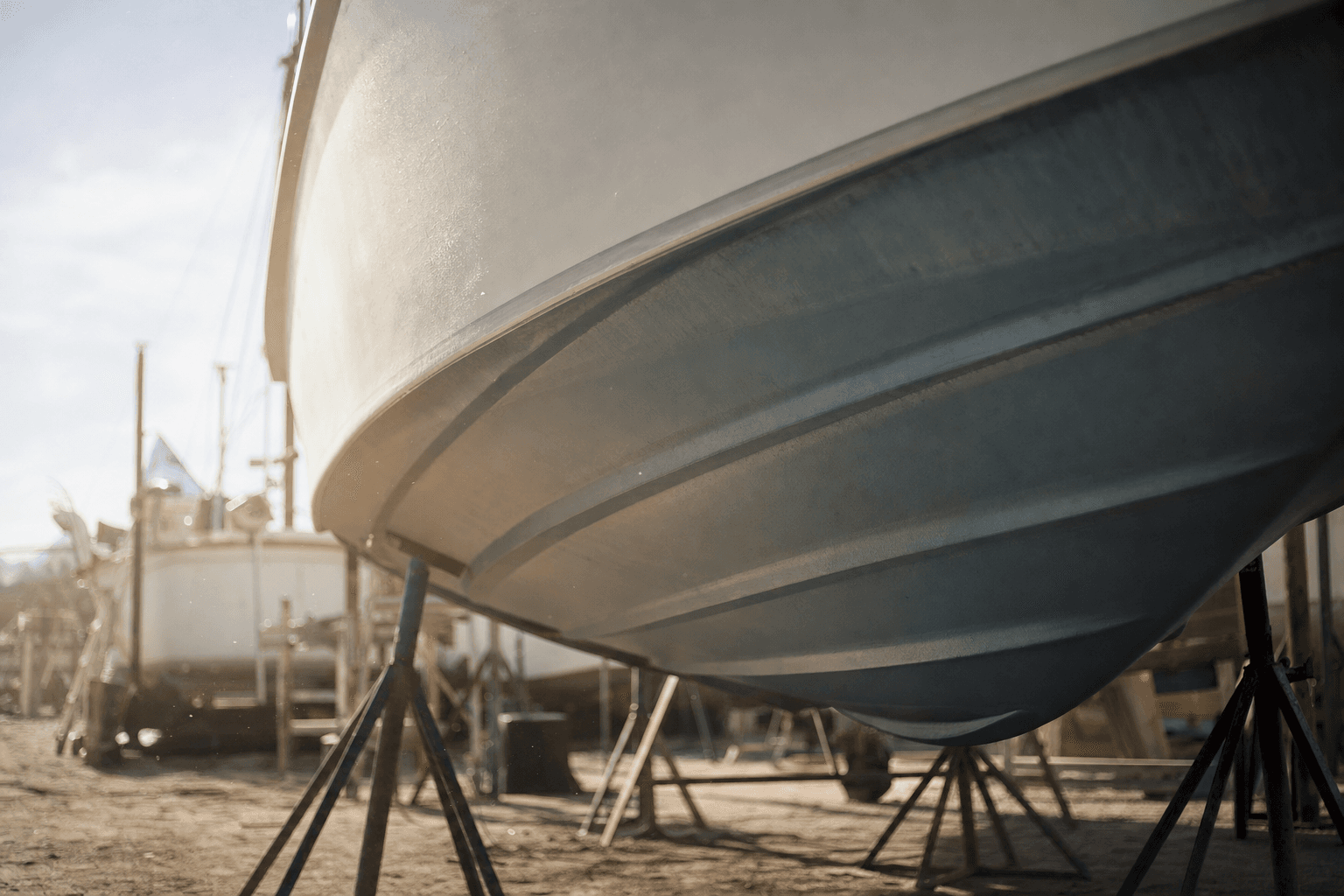 The hull: shapes, the parts of one, and what to watch below the waterlineThe parts of a boat hull explained: keel, chines, strakes and deadrise, what planing and displacement hulls do differently, and what to watch below the waterline.
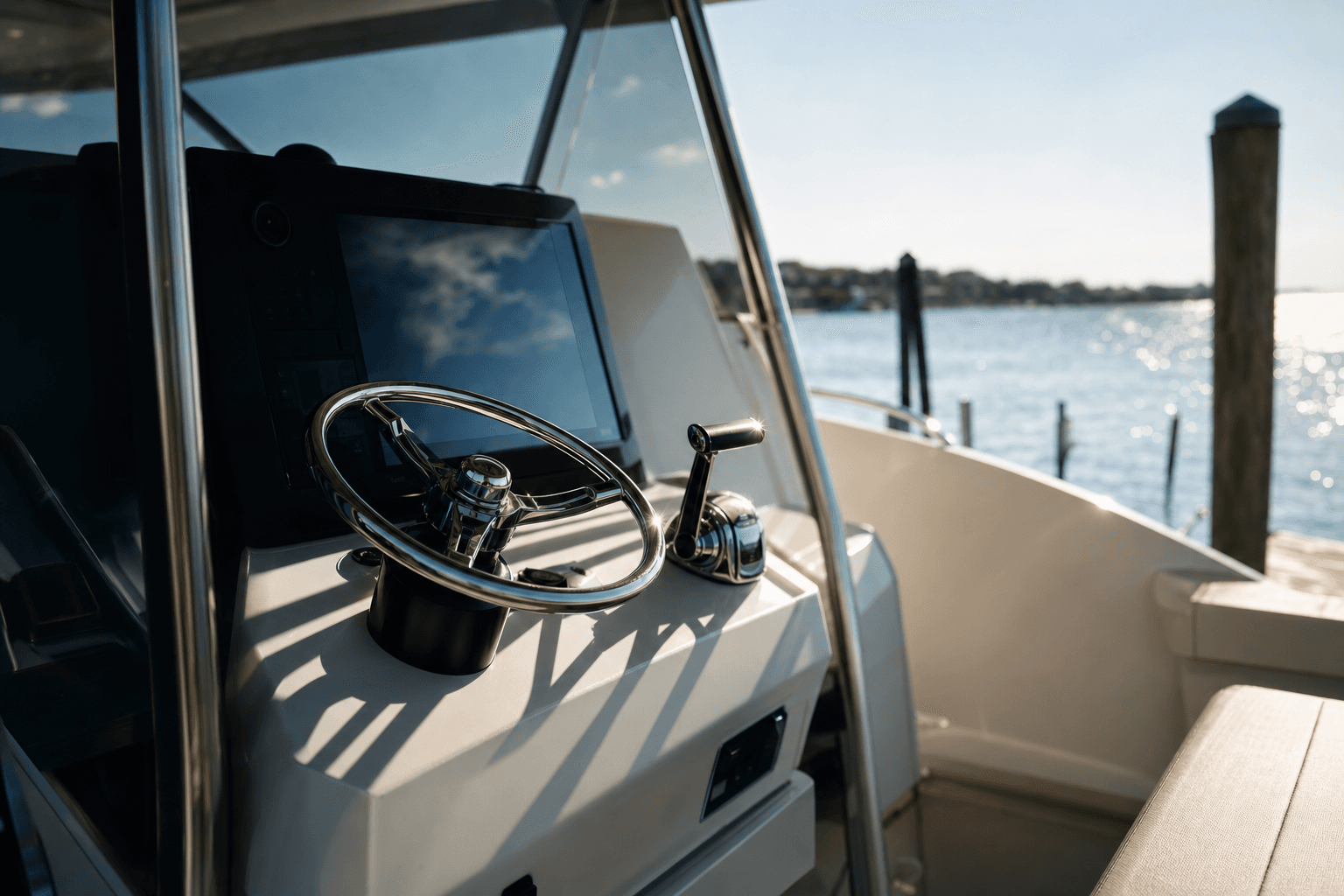 The helm and cockpit: the station you actually drive fromWhat the helm and cockpit of a boat are, the controls and seating that make up the station, and the corroded connections behind most helm faults.
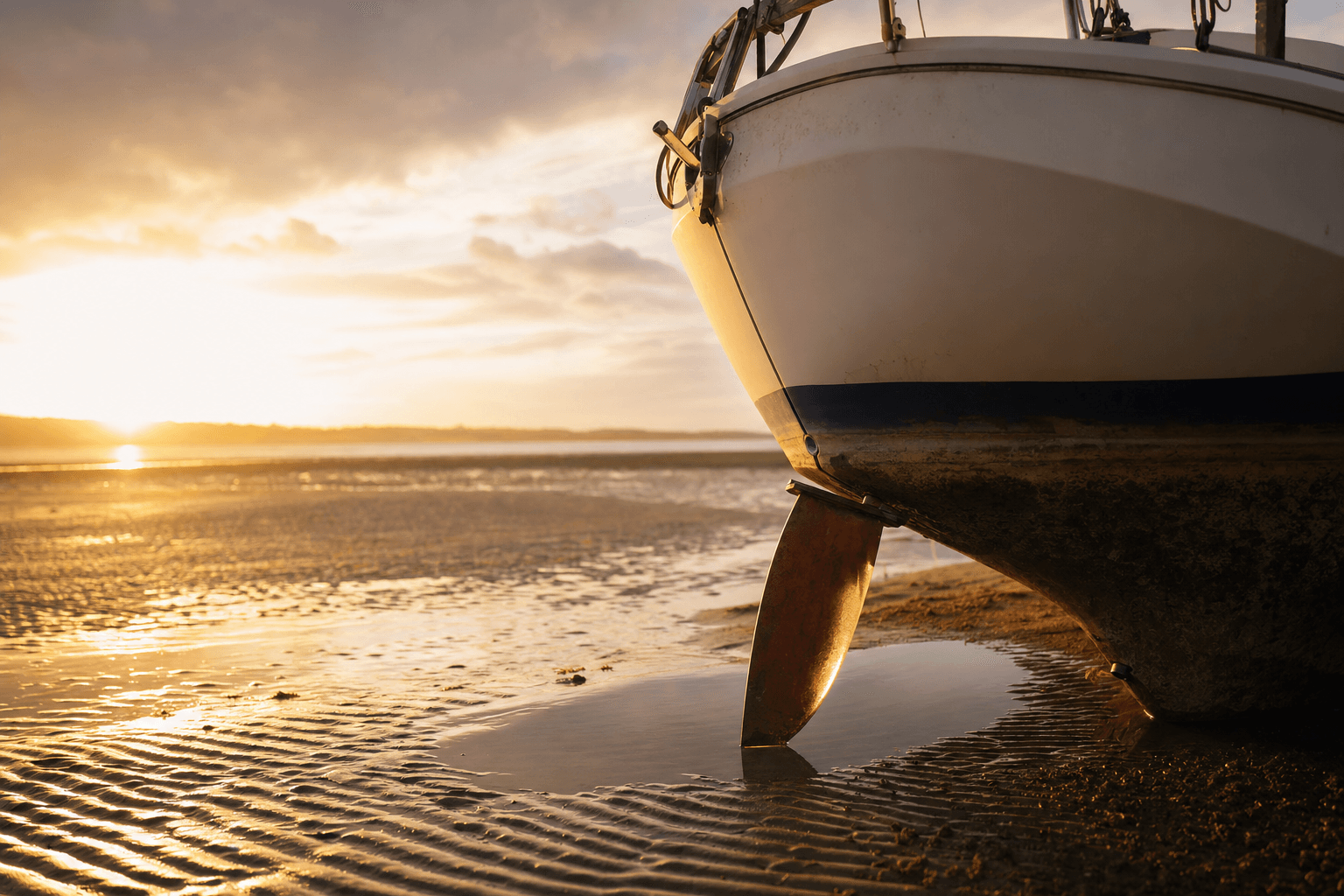 The rudder: how a boat steers, and what wears outWhat the rudder of a boat does, the parts it is made of, how cable, hydraulic and tiller steering connect to it, and what wears out.
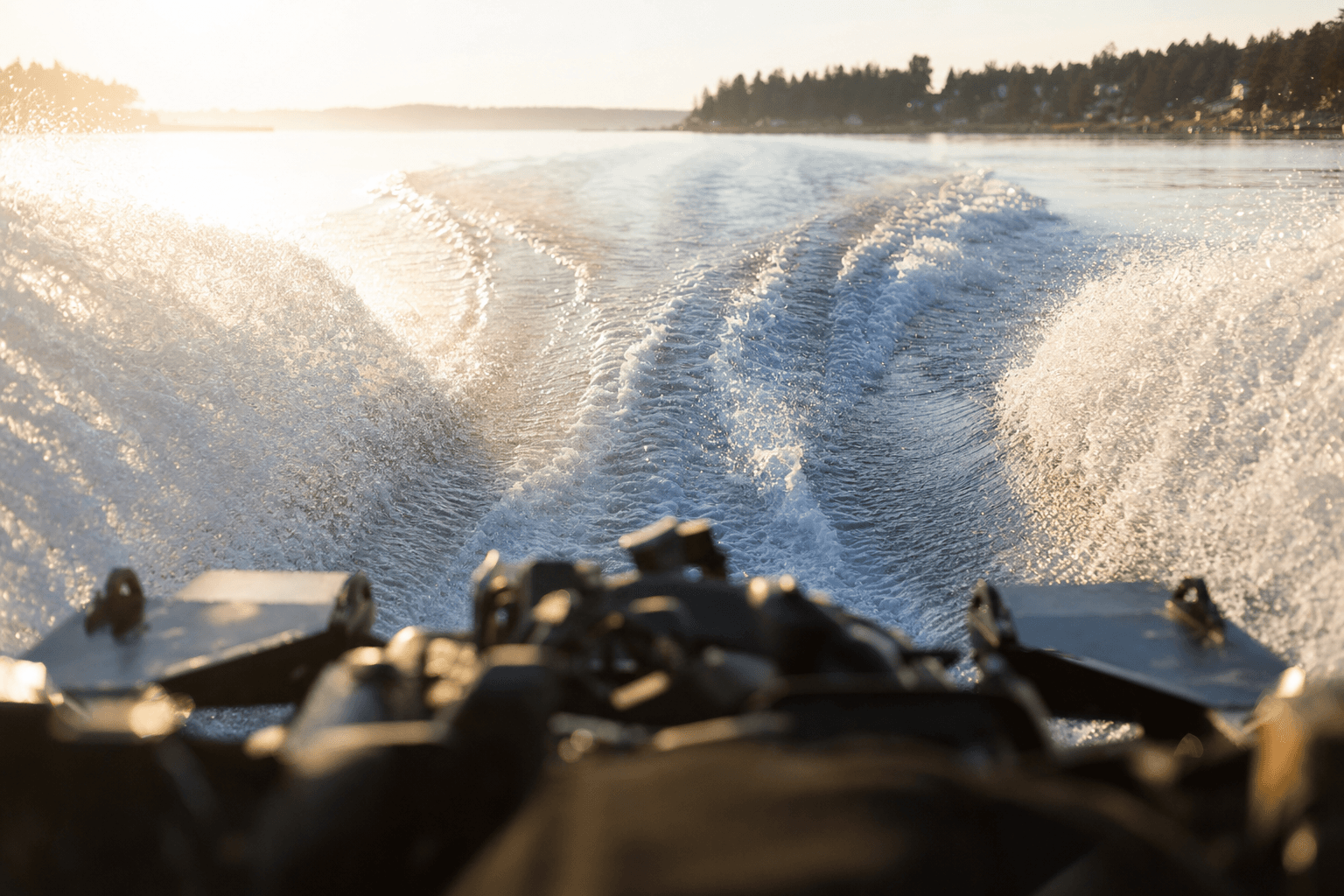 Trim on a boat: engine trim, trim tabs, and how a hull is meant to rideWhat trim means on a boat, the difference between engine trim and trim tabs, tilt vs trim, how to fix porpoising and listing, and what fails in a trim system.
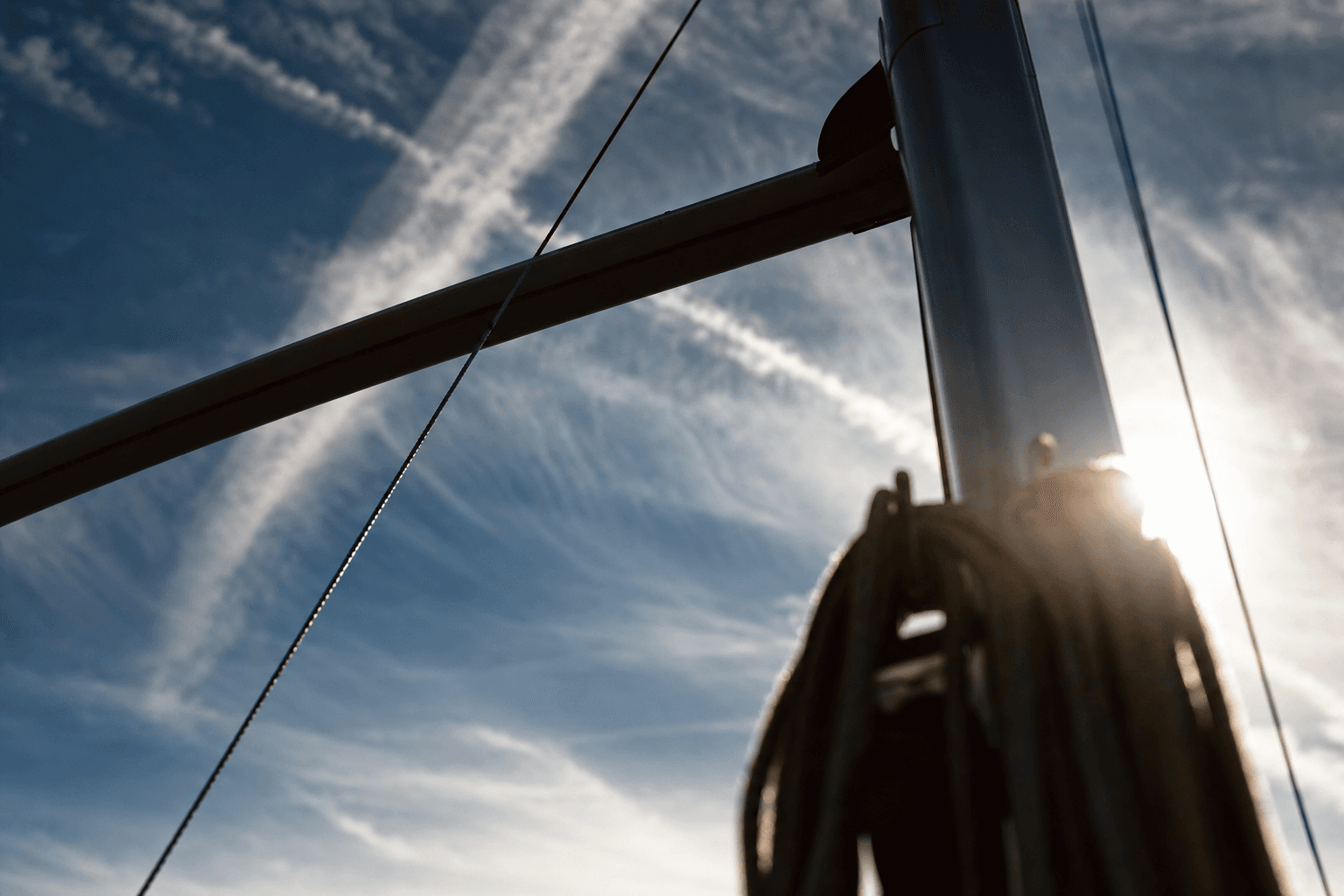 The mast and rigging: every wire and line namedThe parts of a boat mast and its rigging explained: standing versus running rigging, shrouds, stays, spreaders and halyards, and what to inspect.
Lighting for every one of those surfaces
Bow and stern navigation lights, courtesy lighting for the deck, and underwater lights for below the waterline.
Common questions
- What are the main parts of a boat?
- The bow at the front, the stern at the back, the hull as the watertight body, the deck as the walking surface, the transom closing off the stern, the keel running along the bottom, and the gunwale along the top edge of each side where the hull meets the deck. Everything you bolt on attaches to one of those.
- What is the front of a boat called?
- The bow. The direction toward it is fore or forward.
- What is the back of a boat called?
- The stern. The flat panel that closes off the stern is the transom, and on outboard boats it carries the engine. The direction toward the back is aft.
- What is the difference between the hull and the deck?
- The hull is the watertight body of the boat that sits in the water. The deck is the surface built on top of it that you stand on. A hole in the deck is a nuisance; a hole in the hull is a problem. The hull guide covers hull anatomy in detail.
- What is the gunwale on a boat?
- The top edge of the boat's side, where the hull side meets the deck, pronounced gunnel. It is where the rub rail runs and where clamp-on and track-mounted accessories go. A raised lip around the deck itself is a toe rail or a coaming, not the gunwale.
- Why do boats use port and starboard instead of left and right?
- Because left and right change with the direction the speaker is facing, while port and starboard are fixed to the boat itself. Port is the left side facing forward, starboard is the right, and navigation lights follow the same convention with red on port and green on starboard.