 GearPort
Bilge pumps: what size, and how to wire one properly
A bilge pump is the cheapest insurance on a boat and the most commonly misunderstood item on it, because the number printed on the box is measured in conditions your boat does not have.
Two things to take away: buy more capacity than the arithmetic suggests, and wire it so it can still work when nobody is aboard.
What GPH actually means
Centrifugal bilge pumps are rated in gallons per hour at open flow: no hose, no fittings, no vertical lift, and a full 12 volts at the pump. Open flow is the industry norm for the headline number, which makes those numbers comparable with each other and optimistic compared with your installation. Some makers also publish flow at a stated head, and that is the more useful figure when you can get it.
Once installed, output drops, and in a real boat it commonly ends up well below the open-flow rating. Four things take it there: the head, meaning the vertical distance the water has to be lifted to the discharge; the length and diameter of the hose; every fitting, elbow and step-down in the run; and voltage drop in the supply wiring, which slows the motor before it ever touches the water.
Head is the dominant one, and the loss is not a straight line you can do in your head. Most makers publish flow at one or more head heights, sometimes as a curve, so take the figure for the lift your installation actually has rather than the number on the front of the box.
So the practical rule is simple: size up. A pump that looks generous on paper is about right in the boat.
Choosing a pump, and how many
Think in terms of jobs rather than one number. A primary pump sits at the lowest point of the bilge and deals with the ordinary business of rain, spray and packing drips. A second, higher-mounted pump with more capacity is there for the day something is genuinely wrong, and its switch sitting higher means it only runs when the first pump is losing.
Automatic pumps contain their own water sensing and switch themselves on. Non-automatic pumps need an external float switch, or a manual switch at the helm, or both. Kits that pair a pump with a matched float switch are sold for exactly this reason, and they save guessing at the pairing.
A manual pump is worth having as well as, not instead of, an electric one. It works when the battery does not, which is precisely the scenario where you most want to move water.
None of this substitutes for finding the leak. A bilge pump buys time and manages nuisance water; it is not a repair.
Wiring it so it works when you are not there
The point of an automatic bilge pump is that it runs with nobody aboard, which shapes how it is wired. Bilge pump installation has its own ABYC standard, H-22, alongside the general electrical rules in E-11. In practice the pump circuit is commonly fed so that it stays live independently of the master switch, with its own fuse or breaker sized to the conductor rather than to the pump, because the job of overcurrent protection is to protect the wire.
Size the wire for the current and the round-trip length of the run so voltage drop does not starve the pump when it matters. A pump at the far end of undersized wire turns slowly and moves much less water than its label suggests. The marine wire size chart guide gives the gauge for a given amp draw and run length.
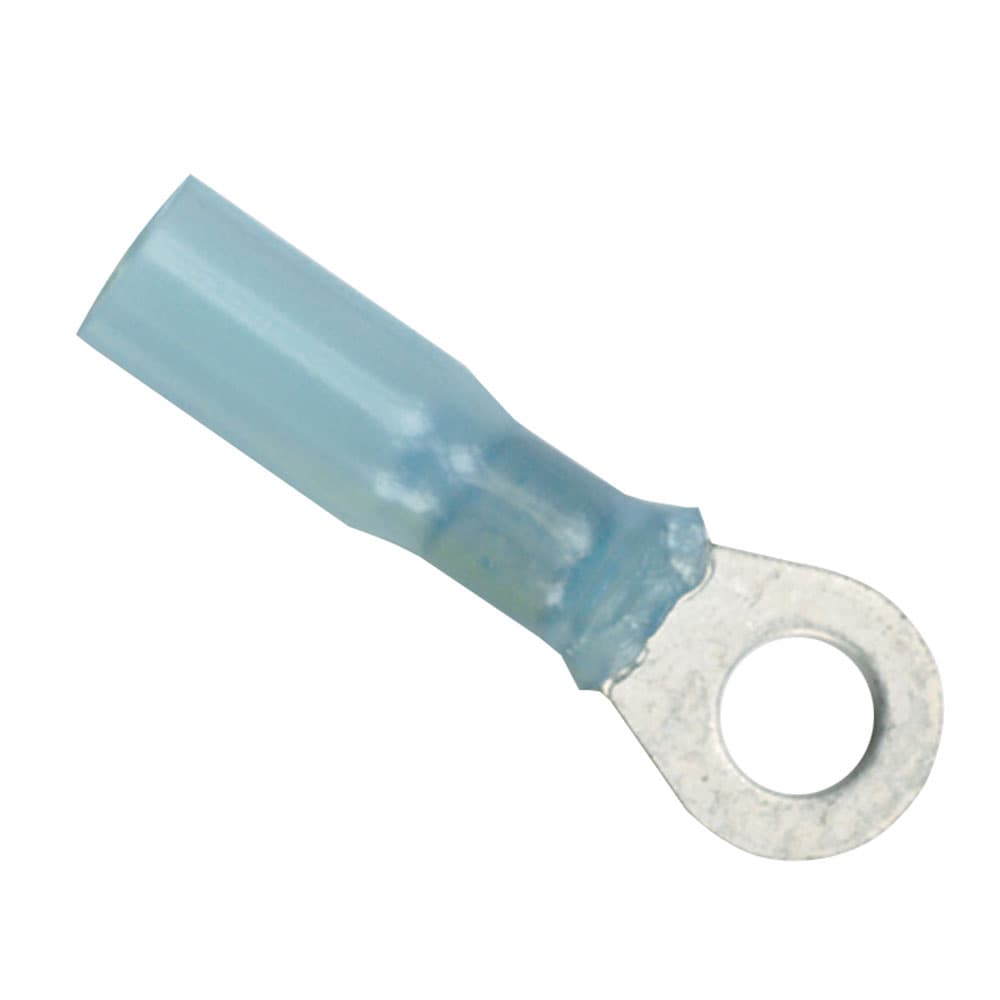
Make the connections properly and keep every splice as high as the run allows, because the one place you do not want a connection is underwater. The marine wiring basics guide covers crimping and sealed terminals, which matter more in a bilge than anywhere else on the boat.
A manual override switch at the helm lets you run the pump when you want to, independently of the float or sensor. A high water alarm, mounted above the level the pump normally switches at, is the other addition worth making: it tells you the pump is losing while there is still time to do something about it.
The discharge, and the mistake to avoid
The discharge fitting should be above the waterline, and ideally high enough that it stays there when the boat is loaded, heeled or squatting under power.
The failure to avoid is siphoning: a discharge that ends up below the water with a hose that runs downhill can let water flow back into the boat, which is the opposite of the job. Routing the hose up to a high point before it exits is the usual defence.
Use hose of the full diameter of the pump outlet, and keep the run short and as free of tight bends as the route allows. Step-down fittings and extra elbows both cost flow, and flow is the whole point.
Keep the strainer clear. A blocked intake is a common reason a working pump moves no water, and it is the cheapest thing on this page to check.
Bilge pumps, automatic and manual
Submersible centrifugal pumps from Rule, Whale, Albin and Commodore in automatic and non-automatic versions, pump kits with float switches, and manual diaphragm pumps.
Discharge fittings and thru-hulls
Hose barb thru-hull fittings in bronze and 316 stainless for the discharge side.
Wire, terminals and circuit protection
Tinned marine cable, heat-shrink terminals and lugs, fuse holders and breakers for wiring a pump circuit that survives a bilge.
Common questions
- What size bilge pump do I need?
- More than the rating suggests. Pumps are rated at open flow with no hose and no lift, and installed output is commonly well below that once head, hose length, fittings and voltage drop are accounted for. Work from the maker's flow-at-head figure for the lift your boat actually has, then size up.
- Why does my bilge pump move less water than its rating?
- Because the rating is measured at open flow: zero vertical lift, no hose or fittings, and full voltage at the pump. Your installation has all of those. Head is the biggest single loss, followed by the length and diameter of the hose, every elbow and step-down in the run, and voltage drop in the supply wiring, which slows the motor before the water is even moving.
- What is the difference between an automatic and a non-automatic bilge pump?
- An automatic pump senses water and switches itself on. A non-automatic pump needs an external float switch, a manual switch, or both.
- Should a bilge pump be wired to stay on all the time?
- An automatic pump only does its job if it can run with nobody aboard, so its circuit is commonly fed independently of the master switch and given its own fuse or breaker sized to the conductor. A manual override at the helm is worth having as well.
- Where should a bilge pump discharge?
- Above the waterline, high enough to stay there when the boat is loaded or heeled, with the hose routed up to a high point before it exits so water cannot siphon back in.
- Do I need two bilge pumps?
- Many owners fit a smaller primary pump at the lowest point for everyday water, plus a larger pump mounted higher for a genuine problem. A manual pump is also worth having, because it works when the battery does not.