 GearPort
The mast and rigging: every wire and line named
A mast is a compression post. The wires either side of it are in tension, and the whole arrangement stands up because those forces balance. Understand that and the vocabulary falls into place: everything on a rig is either holding the mast up, holding a sail up, or pulling a sail in.
Rigging splits cleanly in two. Standing rigging does not move and holds the mast up. Running rigging moves and controls the sails.
The mast and what attaches to it
The mast is the vertical spar. Its bottom sits on the mast step, either on deck or on the keel with the mast passing through a hole in the deck called the partners. The top is the masthead, which carries the halyard sheaves and, depending on the boat, wind instruments and a light. Worth knowing: the light at the top of a sailboat's mast is normally an all-round anchor light or a tricolor, not the forward-facing masthead light the navigation rules mean by that name. Our navigation light rules guide covers which lights a boat has to show and when.
The boom is the horizontal spar along the bottom of the mainsail. It attaches to the mast at the gooseneck. A vang controls how much the boom rises.
Spreaders are the horizontal struts partway up. They push the shrouds outboard so those wires pull at a wider angle, which is what lets a tall mast be supported without wires anchored impractically far out on the deck.
Standing rigging: the wires that hold the mast up
Shrouds run sideways and stop the mast falling athwartships. The ones going over the spreaders to the masthead are upper or cap shrouds; shorter ones lower down are lowers.
Stays run fore and aft. The forestay runs from the masthead forward, and it is what the headsail is set on. The backstay runs aft, and on many boats it can be tensioned to bend the mast and flatten the mainsail.
At deck level these wires land on chainplates, metal fittings tied into the boat's structure. The adjusters at the bottom of each wire are turnbuckles, and they are what you use to tune the rig.
The fittings swaged onto wire ends are the usual failure point. Look for rust weeping, a hairline crack across a swage, or a wire strand standing proud. One broken strand is a warning; several mean the wire is finished. Wire also fatigues inside the swage and inside the lay, where none of that shows, which is why riggers commonly recommend replacing standing rigging on a time or mileage interval rather than on how it looks, and why one wire letting go can put the whole mast over the side.
Running rigging: the lines you pull
Halyards hoist things: the main halyard raises the mainsail, the jib halyard the headsail. Sheets control the angle of a sail once it is up, named for the sail they trim, so the mainsheet and the jib sheets.
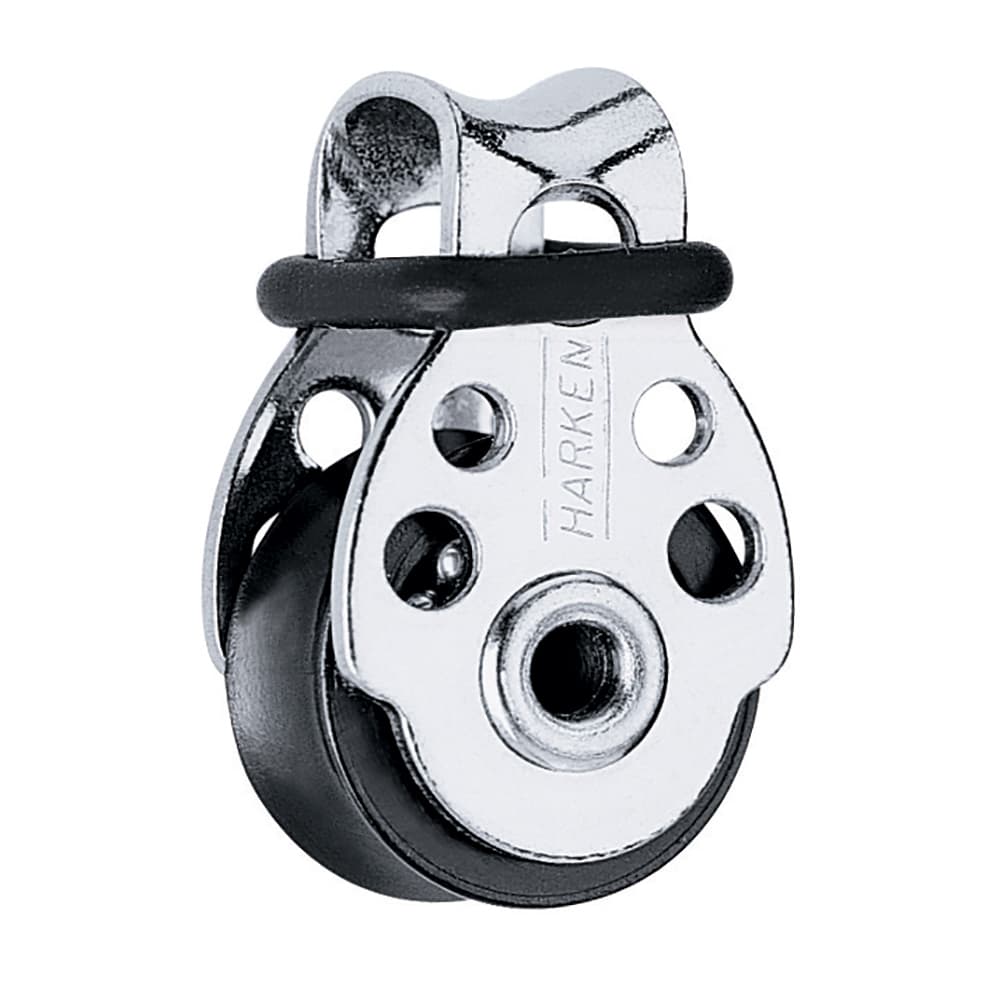
Those lines run through blocks, which are pulleys, and are held by cleats or clutches. A fairlead guides a line to where it needs to go without chafe. Shackles connect line to sail, sail to fitting, and fitting to fitting.
Running rigging fails from chafe and from sun. Both are gradual and both are visible, and a line caught at the point where you first notice it can often be re-led away from whatever is rubbing, or turned end for end, rather than replaced.
What to look at, and how often
At deck level, any time. Turnbuckles for cracks and correct cotter pins, chainplates for weeping rust or cracked sealant, the mast step for corrosion and standing water.
Aloft, at least annually. Swage fittings, spreader tips and boots, halyard sheaves, and the masthead light and wind gear.
Everything under load, always. A rig noise you have not heard before is worth chasing down before the next sail rather than after.
One note of honesty about what we stock: the shelves below hold whatever small rigging hardware we have in at the time, and it is a short list rather than a chandlery. We do not sell masts, standing rigging wire or the terminals and turnbuckles that go on the ends of it, and having a rigger measure, swage and tune wire is not a job to buy by mail order anyway.
Shackles, blocks and rigging hardware
The small rigging hardware in stock right now: stainless shackles, blocks and deck fittings from makers such as Ronstan, Harken and Barton.
Line handling and splicing
Whipping twine, shock cord, rope protectors and splicing tools.
Common questions
- What is the difference between standing rigging and running rigging?
- Standing rigging is fixed and holds the mast up: shrouds, stays, turnbuckles and chainplates. Running rigging moves and controls the sails: halyards, sheets and the blocks they run through.
- What is the difference between a shroud and a stay?
- Shrouds run sideways and stop the mast falling to port or starboard. Stays run fore and aft, such as the forestay at the front and the backstay behind.
- What do spreaders do on a mast?
- They push the shrouds outboard so the wires support the mast at a wider angle. Without them a tall mast would need its shrouds anchored much further out than the width of the boat allows.
- What is a halyard?
- A line used to hoist something up the mast, usually a sail. A sheet, by contrast, controls the angle of a sail that is already up.
- How do I know if standing rigging needs replacing?
- Look for rust weeping from swage fittings, hairline cracks across a swage, and broken wire strands. One broken strand is a warning sign and several mean the wire is done. Rigging also ages even when it looks sound, so an inspection by a rigger is the honest answer for anything you are unsure about.
Sources
- Brion Toss, The Complete Rigger's Apprentice, International Marine, on rig terminology, inspection and wire failure
- Navigation Rules, 33 CFR Part 83, on the lights a vessel shows and what a masthead light is