 GearPort
Trim on a boat: engine trim, trim tabs, and how a hull is meant to ride
Trim is the attitude of the boat in the water: nose up, nose down, level side to side. Getting it right is the difference between a boat that skips, throws spray and burns fuel, and the same boat running flat and quiet at the same throttle setting.
Two separate systems are both called trim, which is where most of the confusion comes from. One angles the engine. The other angles two plates on the transom. They do related things by different means.
Engine and drive trim
Trimming the engine tilts the whole outboard or sterndrive so that the propeller thrust no longer points straight back. Thrust angled slightly down pushes the bow down. Thrust angled up lifts the bow.
Trimming in, sometimes called trimming down, tucks the drive toward the boat and pushes the bow down. That is what you want when accelerating out of the hole, because a bow-down attitude gets the hull onto plane sooner, and in rough water, where you want the sharp forward part of the hull doing the cutting. It means a moderate amount of trim in, not the drive tucked all the way down: past a point the bow digs, the hull plows instead of accelerating and the boat takes longer to plane, not less.
Trimming out, or up, lifts the bow. Once on plane, a little trim out reduces the wetted surface of the hull, which usually buys speed and economy. Too much and the propeller starts to lose its grip on the water and the boat begins to hop.
There is a limit in both directions. Over-trimmed down, the boat plows, steers oddly and throws spray. Over-trimmed up, you get porpoising or ventilation.
Tilt vs trim
The same hydraulic unit on the back of the boat does two jobs with two names. Trim is the fine adjustment within the running range, the lower part of the drive's travel, used while the propeller is in the water and doing work. It is what shapes how the boat rides. Where that range ends varies with the engine, and the owner's manual for yours states it.
Tilt is everything beyond that: the large, fast movement that swings the drive up and clear of the water for trailering, beaching, mooring in the shallows, or keeping the lower unit out of growth at the dock.
The mechanical difference is often real, not just naming. Many larger outboards use a pair of short, strong trim rams for the trim range and a separate, longer tilt ram to lift the engine clear, while many smaller ones do both jobs with a single integrated tilt-and-trim cylinder. The owner's manual for your engine shows which arrangement it has.
That is why the operating rule exists: do not run the engine under load in the tilt range. Past the trim range the water pickups approach the surface and the geometry is not built to take thrust. Many engines tolerate idling in partial tilt for creeping through shallows; making power there is how gears and water pumps die.
In practice: use trim constantly under way, and tilt when the day is over.
Trim tabs
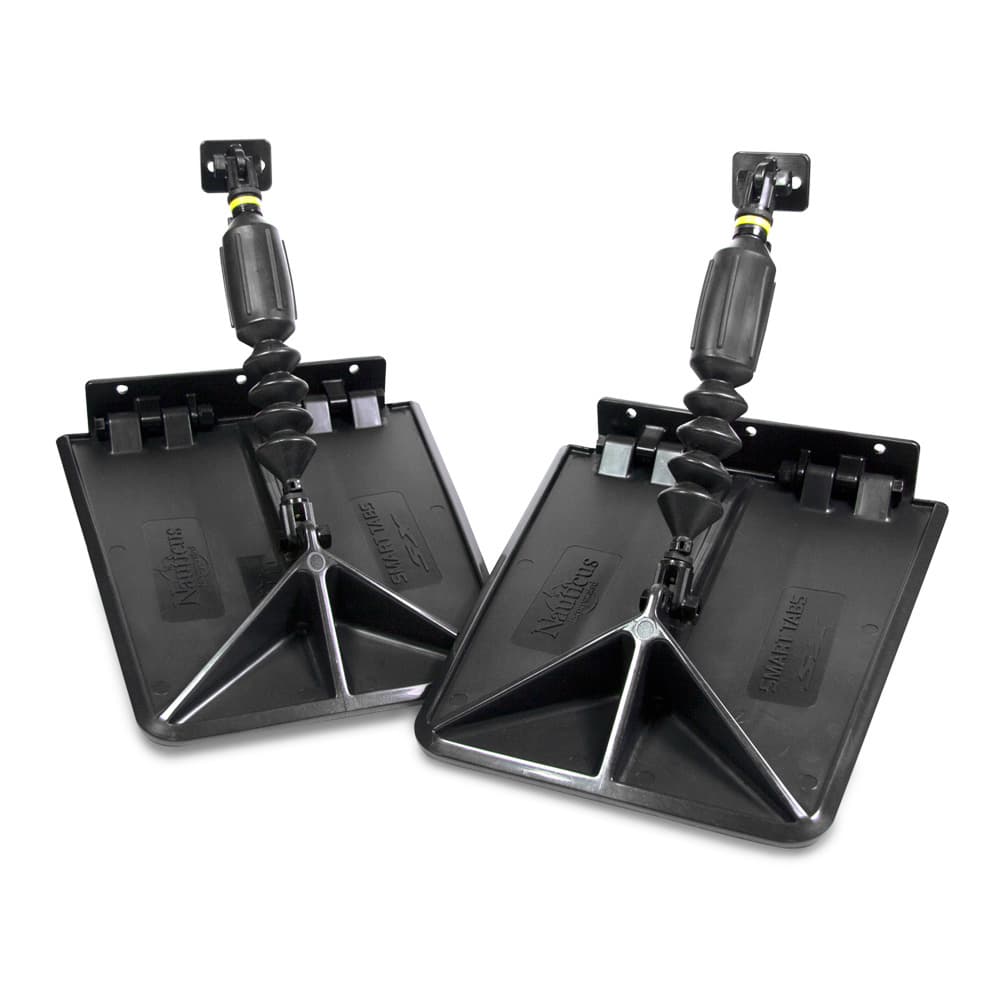
Trim tabs are two adjustable plates mounted on the bottom edge of the transom, one either side, commonly driven by electric actuators or hydraulic rams. Deflecting a tab downward pushes water down, which lifts the stern on that side. Both tabs together therefore push the bow down. Automatic tabs are a variation on the same idea, sprung by a gas cylinder instead of a powered actuator, so they deflect with speed and load rather than on a switch.
Because they work independently, they do something engine trim cannot: correct the boat side to side. A boat that leans from an unbalanced load, a full tank on one side or a crosswind can be levelled with one tab.
Getting the direction right is worth a moment, because a single tab acts diagonally. Lowering the port tab lifts the port side of the stern, which rolls the boat to starboard and so lowers the starboard bow. That is the convention behind the usual shorthand, that the port tab controls the starboard bow. In practice you deploy the tab on the side that is sitting low, to lift it.
Many control panels take that off your hands by labelling the switch with the result rather than with the tab that moves: press the side you want to go down. Not all of them do, and some are marked bow up and bow down instead, so read your own panel and watch what the boat does to the first small input before you trust the labels.
Used together, both tabs down gets the boat on plane faster and lets it stay on plane at a lower speed, which matters in a chop. Both tabs up is the neutral, minimum-drag position for open-water running. Small inputs, then a pause to let the boat settle, is the whole technique: tabs act with a delay, and chasing them is how a boat ends up wallowing on full deflection.
Fitting them is transom work. The plate hinges off the bottom edge of the transom, the actuator or ram sits above it, and both need fasteners through the transom skin that have to be bedded and backed properly, since they are low down and some of them are below the waterline at rest. Plate size follows boat length and weight rather than taste, a wider plate giving more lift per degree of deflection, and makers publish a sizing chart for exactly that reason: a tab too small will not lift a loaded stern, and one too big is easy to over-deflect.
A jack plate is a different tool that also changes how the hull rides: it moves the engine aft and lets you raise it, which reduces drag and lets the boat run in shallower water. Setback and height, not angle.
Porpoising, listing and plowing
Porpoising is a rhythmic bow-up, bow-down bouncing at speed, with the boat cycling in and out of contact with the water. It is usually too much bow lift, so the first thing to try is trimming the drive down slightly, or a touch of tab.
Listing is leaning to one side and staying there. Unbalanced load is the first thing to check, and with the tabs neutral it is usually the answer. A list that stays with the load moved around can also be water lying in one side of the bilge or in saturated foam, a tank offset from the centerline, or, at speed, propeller torque. Tabs will correct the symptom whatever the cause, which is the reason to find the cause.
Plowing is running bow-down with the stern squatting and a wall of water pushed ahead, typically just below planing speed or with too much trim in. More throttle or less trim in gets the boat over the hump and onto plane.
Ventilation is the propeller pulling air down from the surface and losing bite, which shows up as engine speed rising without matching boat speed. Too much trim out and too high an engine mount both cause it.
What fails in a trim system
The actuator or ram. A tab that has stopped moving is the actuator, its wiring, or the control at the helm. Checking for voltage at the actuator while someone holds the switch separates the three without guesswork.
Hydraulic leaks. Trim tab and drive trim hydraulics both work hard in a wet, salty place. Weeping fittings and low fluid show up as tabs that will not hold position.
The trim relay or pump on the engine. Drive trim that has stopped responding often comes down to a relay or the trim pump rather than the switch at the helm.
Tab anodes. Trim tabs are metal plates hanging in the water off the back of the boat. Many are fitted with a sacrificial anode, and where one is fitted it is a consumable, so check what your own tabs carry and how much of it is left.
Trim tabs and actuators
Trim tab kits and the actuators, tubing and indicator wiring that go with them, from the makers in stock right now.
Trim and tab anodes
Sacrificial anodes for trim tabs and outboard trim components.
Common questions
- What does trim mean on a boat?
- The attitude of the boat in the water, meaning how bow-up or bow-down it sits and whether it is level side to side. It is adjusted with engine trim, with trim tabs, or with both.
- What is the difference between engine trim and trim tabs?
- Engine trim angles the drive so the propeller thrust points slightly up or down, which raises or lowers the bow. Trim tabs are two plates on the transom that work independently, so as well as lowering the bow they can level a boat that leans to one side.
- What is the difference between tilt and trim?
- Trim is the fine adjustment of drive angle within the running range, made under way with the propeller in the water, and it shapes how the boat rides. Tilt is the larger movement beyond that range which lifts the drive clear of the water for trailering, beaching or mooring. Do not run the engine under load in the tilt range. Where the trim range ends on your engine is in its owner's manual.
- What are trim tabs for?
- They are two plates on the bottom edge of the transom that angle down to push water down and lift the stern on that side. Both tabs down puts the bow down, which gets a boat on plane sooner and lets it hold plane at a lower speed. One tab down levels a boat that leans. Because the two plates work independently, they can correct a boat side to side, which engine trim cannot do.
- How do I stop my boat porpoising?
- Porpoising is usually too much bow lift. Trim the drive down slightly, or add a small amount of trim tab, and the hull settles. Weight distribution and propeller choice also contribute.
- Which tab do I use to fix a lean?
- Deploy the tab on the side that is sitting low, to lift it. A single tab works diagonally: lowering the port tab lifts the port stern, which lowers the starboard bow, which is the convention behind the shorthand that the port tab controls the starboard bow. Many helm switches are labelled by the result you want rather than by the tab that moves, so pressing the side you want to come down does the right thing, but not every panel is marked that way. Check yours, use small inputs, and wait for the boat to settle between them.
- What does a jack plate do?
- It mounts between the transom and the engine to move the engine aft and allow it to be raised. That reduces drag and lets the boat run in shallower water. It changes engine position, not engine angle.