 GearPort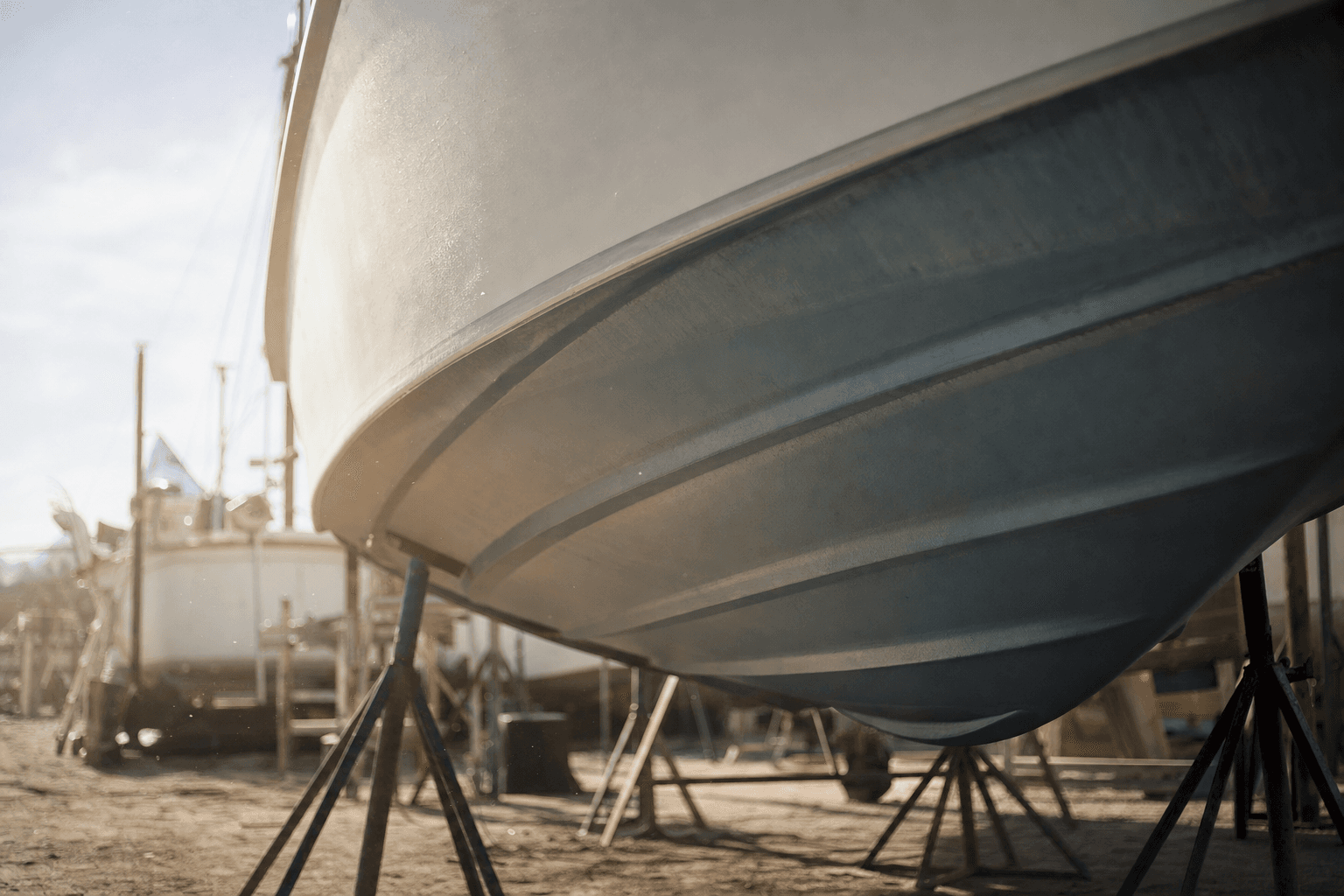
The hull: shapes, the parts of one, and what to watch below the waterline
The hull is the watertight body of the boat. Everything else is bolted to it, and its condition is the difference between a boat and a large planter.
Two things are worth understanding: the shape, which decides how the boat behaves, and the holes, because almost every hull problem is either a hole somebody made or corrosion around one.
The parts of a hull
The keel runs fore and aft along the bottom, the backbone of the boat. On a sailboat with a ballasted keel it also carries weight low down to resist heeling and sideways slip. On a small powerboat it may be little more than a reinforced centerline.
Chines are the edges where the bottom of the hull turns into the sides. A hard chine is a distinct corner; a soft or rounded chine is a curve. A hard chine gives the hull an edge to bite with, which is part of why a planing boat can bank into a turn and hold it, alongside deadrise, running surface and speed.
Strakes, sometimes called spray rails, are the long ridges running along the bottom. They throw spray outward and downward and add lift, which keeps the deck drier and helps the boat get up on plane.
Deadrise is the angle of the hull bottom away from horizontal. A flat bottom has essentially no deadrise and rides efficiently in calm water; a deeper V has more and cuts through chop at the cost of stability at rest and fuel.
The topsides are the sides of the hull above the waterline. The bottom is everything below it. The freeboard is the height from the waterline up to the deck edge.
Planing and displacement, and why it matters when you buy
A displacement hull pushes water aside and travels through it. It is efficient and comfortable at modest speeds and has a practical speed limit set by its waterline length. Trawlers, most sailboats and large commercial vessels work this way.
A planing hull climbs up and rides on top of the water once it has enough power and speed, supported by hydrodynamic lift rather than only buoyancy. Almost every runabout, bass boat and center console is a planing hull, and that is why trim, weight distribution and strakes matter so much to how one rides.
Semi-displacement hulls sit between the two. The reason to care is that the fittings and habits differ: a planing boat cares about getting on plane cleanly, which is a trim tab and propeller conversation, while a displacement boat cares about steady efficiency.
Everything that penetrates the hull
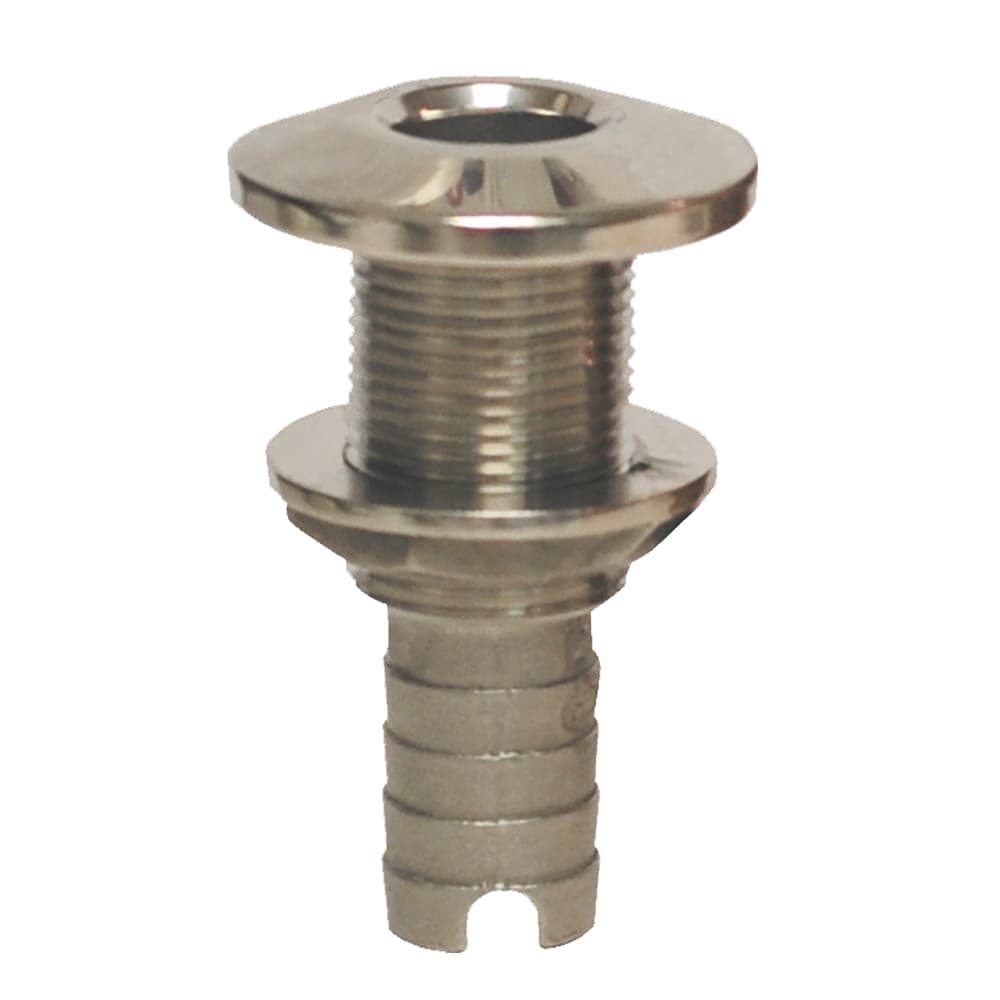
A thru-hull is any fitting passing through the hull: engine cooling intakes, livewell pickups, bilge and sink drains, speed and depth transducers. Below the waterline each one is a deliberate hole in the boat.
A seacock is the valve on a thru-hull that lets you shut the water off. Any below-waterline thru-hull connected to a hose is safer with one, because the alternative is having no way to stop the flow when a hose gives up.
The standards care about strength and shutoff. ABYC H-27, which covers seacocks, thru-hull connections and drain plugs, asks that an installed below-waterline seacock and thru-hull assembly withstand a 500 pound static load applied for 30 seconds, and that there be a means of closing the opening. Material is a separate, corrosion argument on top of that.
On material: bronze is the traditional below-waterline choice and holds up in salt water. Glass-reinforced polymer fittings are non-metallic, so galvanic corrosion does not apply to them, though strength and standards compliance are decided product by product rather than by the material, so read what the fitting itself is rated for. 316 stainless is widely used and is the grade to look for if you are fitting stainless below the waterline, but stainless has one specific weakness down there: in the tight crevice between a fitting and its nut, water sits without oxygen, the passive film that makes stainless stainless breaks down, and crevice corrosion proceeds out of sight. That is an inspection habit rather than a ban. Look at stainless fittings whenever the boat is out, and treat pitting or rust weeping from the joint as a reason to replace rather than to polish. Whatever you fit, do not mix metals in one below-waterline assembly without knowing which one will corrode first.
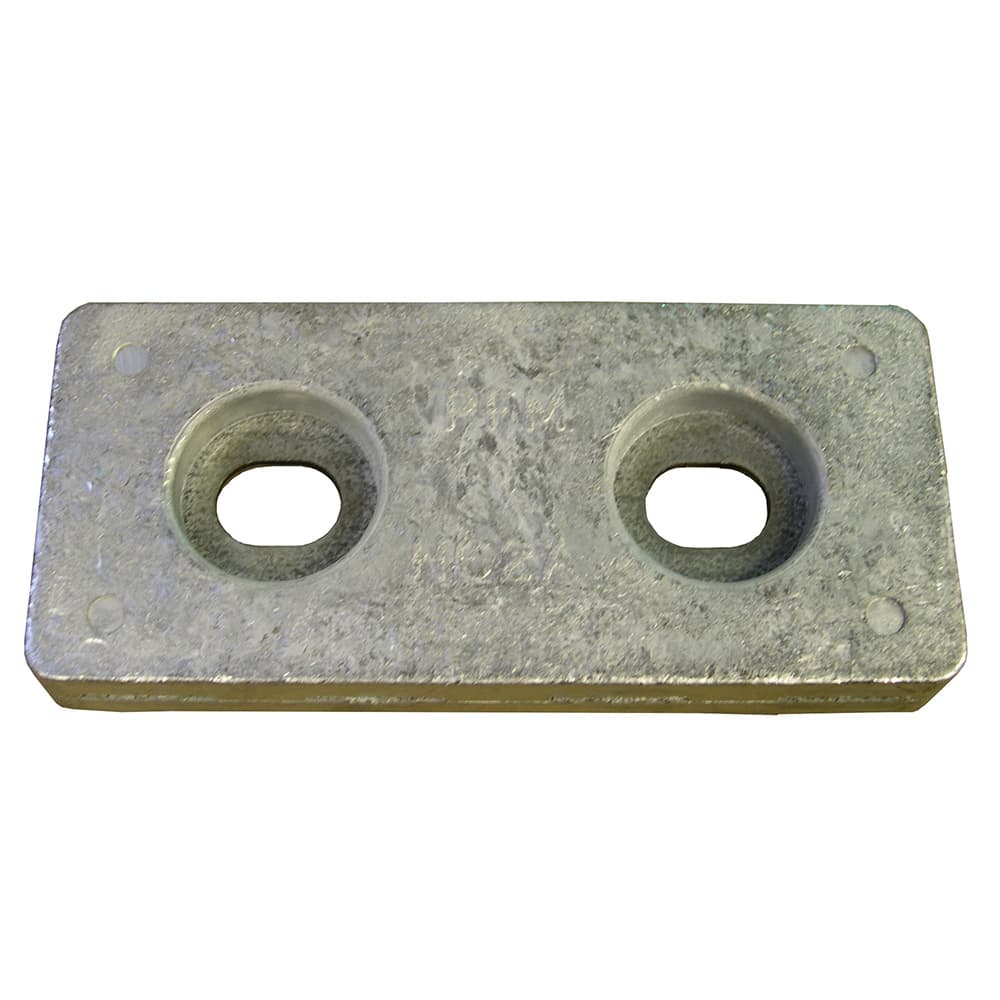
Anodes protect what remains. A sacrificial anode corrodes in place of your metal fittings, drives, shafts and rudders. Match the alloy to the water: zinc is the traditional choice for full-salinity salt water, aluminum alloys cover salt and brackish and some are rated for fresh water as well, and magnesium is the usual fresh water choice. Zinc films over in fresh water and other low conductivity water, meaning it stops protecting, and magnesium in salt water is consumed very quickly, so go by what the maker rates the anode for rather than by the metal alone. Replace an anode well before it is gone, because it protects nothing once it has wasted away.
What goes wrong below the waterline
Neglected anodes. The cheapest failure on the boat and the most expensive consequence. Nothing looks wrong until a drive, shaft or fitting starts pitting.
Corroded thru-hulls and seized seacocks. A valve that has not been exercised in years may not close when it needs to, and a corroded fitting can fail under load. Work them, and look at them properly whenever the boat is out.
Blisters. Fiberglass hulls can develop blisters below the waterline when water works into the laminate over a long period. They are a bottom-condition problem, generally not an emergency, and diagnosis belongs to somebody with the boat out of the water and the experience to grade it.
Impact damage. Groundings and floating debris hit the keel and the leading edges first. What matters is not the gelcoat scrape but whether the structure underneath moved.
Growth. Anything living on the bottom costs fuel and speed. That is the entire argument for bottom paint on a boat kept in the water.
Thru-hull fittings, seacocks and strainers
Bronze and stainless thru-hulls from GROCO and Attwood, hull strainers, and livewell pickups.
Anodes for hulls, drives and rudders
Zinc and aluminum anodes from Tecnoseal and Performance Metals, with magnesium available for fresh water, including complete outboard and sterndrive kits.
Common questions
- What are the parts of a boat hull?
- The keel along the bottom centerline, the chines where the bottom meets the sides, strakes running fore and aft on the bottom, the topsides above the waterline, and the bottom below it. Freeboard is the height from the waterline to the deck edge.
- What is deadrise on a boat?
- The angle of the hull bottom away from horizontal. Less deadrise means a flatter, more stable and more efficient hull in calm water; more deadrise cuts through chop better but is less stable at rest.
- What is the difference between a planing hull and a displacement hull?
- A displacement hull travels through the water and is limited in speed by its waterline length. A planing hull rises up and rides on the surface once it has enough speed, supported by hydrodynamic lift.
- What is a seacock?
- A valve fitted to a thru-hull so you can shut off the water. Below-waterline thru-hulls connected to hoses should have one, because without it there is no way to stop the flow if the hose fails.
- Which anode do I need, zinc or aluminum?
- Zinc is the traditional alloy for full-salinity salt water and aluminum covers salt and brackish, with some aluminum alloys rated for fresh water as well. Magnesium is the usual fresh water choice. Zinc films over in fresh water and stops protecting, and magnesium in salt water is eaten away very quickly, so check what the maker rates the anode for.