 GearPort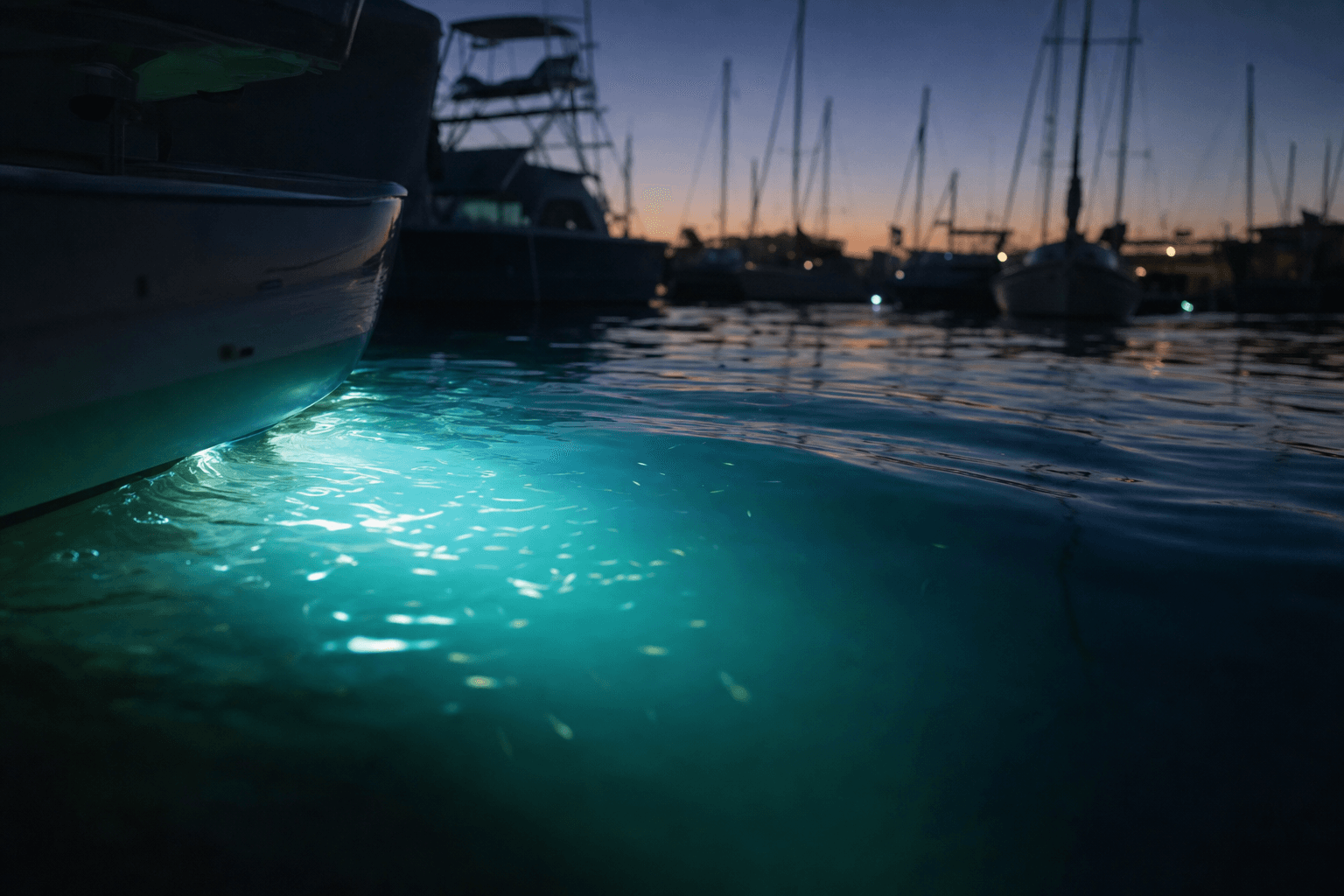
How to choose underwater boat lights
Underwater lights are one of the few upgrades that change how a boat feels rather than how it performs. They are also one of the easier ones to get wrong, because the decisions that matter are made before anything is bolted on: color, count, mounting style and position.
This is the buying side. If you want the anatomy first, the transom guide covers what else lives back there and what tends to fail.
Color: pick for your water, not for the photo
Water absorbs light unevenly, so the color that looks best depends entirely on what you are floating in.
Blue is the classic marina look and travels well in clear water. It is the color most people picture when they think of underwater lighting, and in clean Gulf or Caribbean water it is spectacular.
Green holds up better in greener, more turbid inshore water, and it is the traditional choice for fishing. The reason usually given by anglers is that a lit patch of water gathers plankton, and the baitfish that feed on the plankton follow.
White shows the water and the bottom honestly. It is the most useful color if the point is to see rather than to glow, for example when swimming off the boat at night.
RGBW units produce all of it, plus color changes and effects, from a switch or an app at the helm. They cost more and they are the ones owners rarely regret, because the right color in June is not the right color in a different port in September.
How many lights
Two lights, one either side of the centerline, is the usual arrangement on runabouts and small center consoles. That fills the water behind the boat evenly and looks deliberate rather than accidental. The wider the transom, the more a single light reads as a spotlight and a pair reads as lighting.
One light works, sits on or near the centerline directly behind the boat, and costs less than a pair. The saving is on the fitting rather than on the whole job, because the cable run, the switch and the fused circuit are much the same work either way. The glow is noticeably narrower, which is fine if you mostly want the effect from the swim platform.
Three or four is where larger boats and anyone who wants the water genuinely lit rather than tinted ends up. Past that the limit is current draw and wiring rather than looks: add up the draw of all of them together, size the wire and the fuse for that total, and check the switch is rated for it.
Output is quoted in lumens, and more is not automatically better: a bright light in murky water lights up the murk. Compare the figures carefully as well, because some makers quote what the finished fitting puts out and others quote the raw output of the LEDs inside it, and those two numbers are not directly comparable. Match the output to the water clarity and the size of the transom you are lighting.
Surface mount or thru-hull
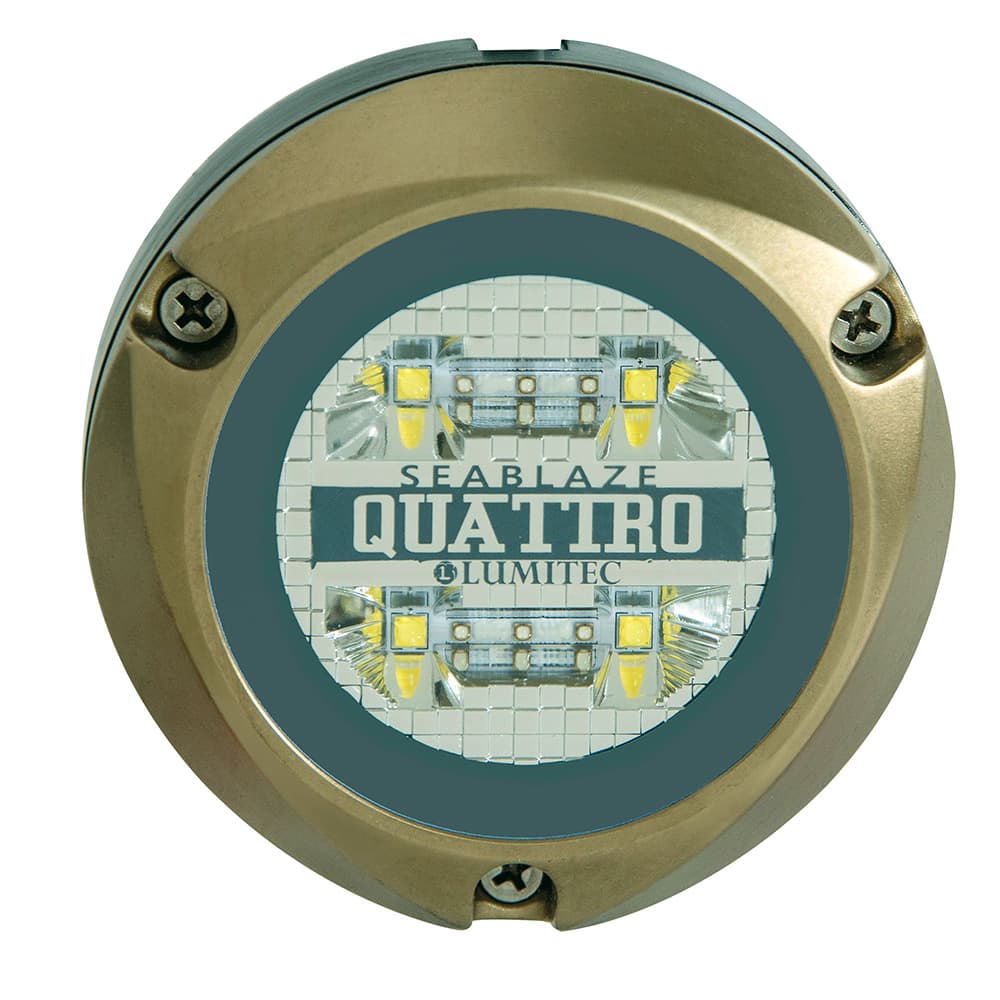
Surface mount lights bolt to the outside of the transom and need only a small hole for the cable. That makes them the sensible first install, the sensible choice on a cored transom, and the easier one to service or replace later. They sit proud of the hull, which almost nobody notices below the waterline.
Thru-hull lights pass through a larger bored hole and sit flush, and they are the usual choice where the most output is wanted from a single fitting. They are also far less forgiving to install: a bigger hole, more careful sealing, and a job that is genuinely worth handing to a yard if the transom is cored and you have not done it before.
Either way, the mounting rule is the same and it is not negotiable: below the waterline. These lights are cooled by the water around them, and mounting one where it can run dry shortens its life as well as looking wrong.
Where they go
On the transom, spaced either side of the centerline and clear of the propeller. Prop wash is aerated, churned water and it scatters light instead of carrying it.
Set a pair symmetrically, the same distance out from the centerline and at the same height, because a pair that is not level is the thing people notice from the dock. Height matters as much as spacing. The fitting wants to be deep enough to stay under water with the boat at rest and loaded, and deep enough that wake and chop do not leave it running dry.
Keep them clear of strakes, chines and anything else that disturbs the flow over that part of the hull, and clear of the transducer, the trim tabs and the backing hardware those need. Before you mark a hole, look at the same spot from inside the boat and confirm what is behind it. A stringer, the transom knee, a fuel tank, foam or a wiring loom all rule a position out.
Think about where you will actually be sitting when you look at the result. Most people are on the swim platform or in the cockpit, not fifty feet astern.
Cable runs matter more than people expect. Plan a route into the boat that does not sit in bilge water, and terminate on a switched, fused circuit rather than splicing into whatever is nearest.
Before you drill anything
Check the transom. If it flexes, cracks, feels spongy near existing fastenings or weeps rust from bolt holes, stop and deal with that first. A wet cored transom is not a surface to add fastenings to.
Over-drill and fill a cored hole. Common practice is to make the hole oversize, remove some core, fill the void with thickened epoxy and re-drill through solid material, so the fastening never touches the core and water cannot track into it.
Use a sealant rated for below-waterline service and fit backing where a fastening carries load. Any hole below the waterline is a decision rather than a detail.
Know what you are buying into on service. A light that fails at the end of a season is a different problem depending on whether it unbolts from outside or has to come out through the hull.
Underwater lights we stock
Surface-mount and thru-hull LEDs from Lumitec, Hella Marine, Attwood, OceanLED and Hydro Glow, including full RGBW spectrum units controlled from the helm.
Common questions
- What color underwater light is best?
- Blue travels furthest in clear water and is the classic marina look. Green performs better in greener inshore water and is the usual choice for fishing, on the view held by most anglers that a lit patch of water gathers plankton and then the baitfish that feed on it. White is the one to pick if the point is to see rather than to glow, and RGBW units do all of it from the helm. The color section above goes through each in turn.
- How many underwater lights do I need?
- Two, one either side of the centerline, suits most runabouts and small center consoles. One works but throws a narrower glow and costs less, and larger boats or anyone wanting the water genuinely lit go to three or four, at which point the current draw and the wiring decide the limit.
- Should underwater lights be above or below the waterline?
- Below. The surrounding water cools the light, so a fitting mounted where it can run dry has a shorter life as well as looking wrong.
- Surface mount or thru-hull underwater lights?
- Surface mount bolts to the outside of the transom and needs only a small cable hole, which makes it the easier and more forgiving install and simpler to service. Thru-hull fittings sit flush and are the usual choice where the most output is wanted from one fitting, at the cost of a much less forgiving installation.
- Where do you mount underwater boat lights?
- Below the waterline on the transom, either side of the centerline and clear of the propeller and its wash, which is aerated and scatters light. Set a pair symmetrically and deep enough to stay submerged with the boat at rest and loaded, keep clear of strakes, transducers and trim tab hardware, and check from inside the boat what sits behind the spot before you drill.
- Do underwater lights attract fish?
- A lit boat at anchor often ends up with life under it. The explanation anglers give is that the light gathers plankton and the baitfish that feed on them follow. Green is the traditional color for that job in inshore water.